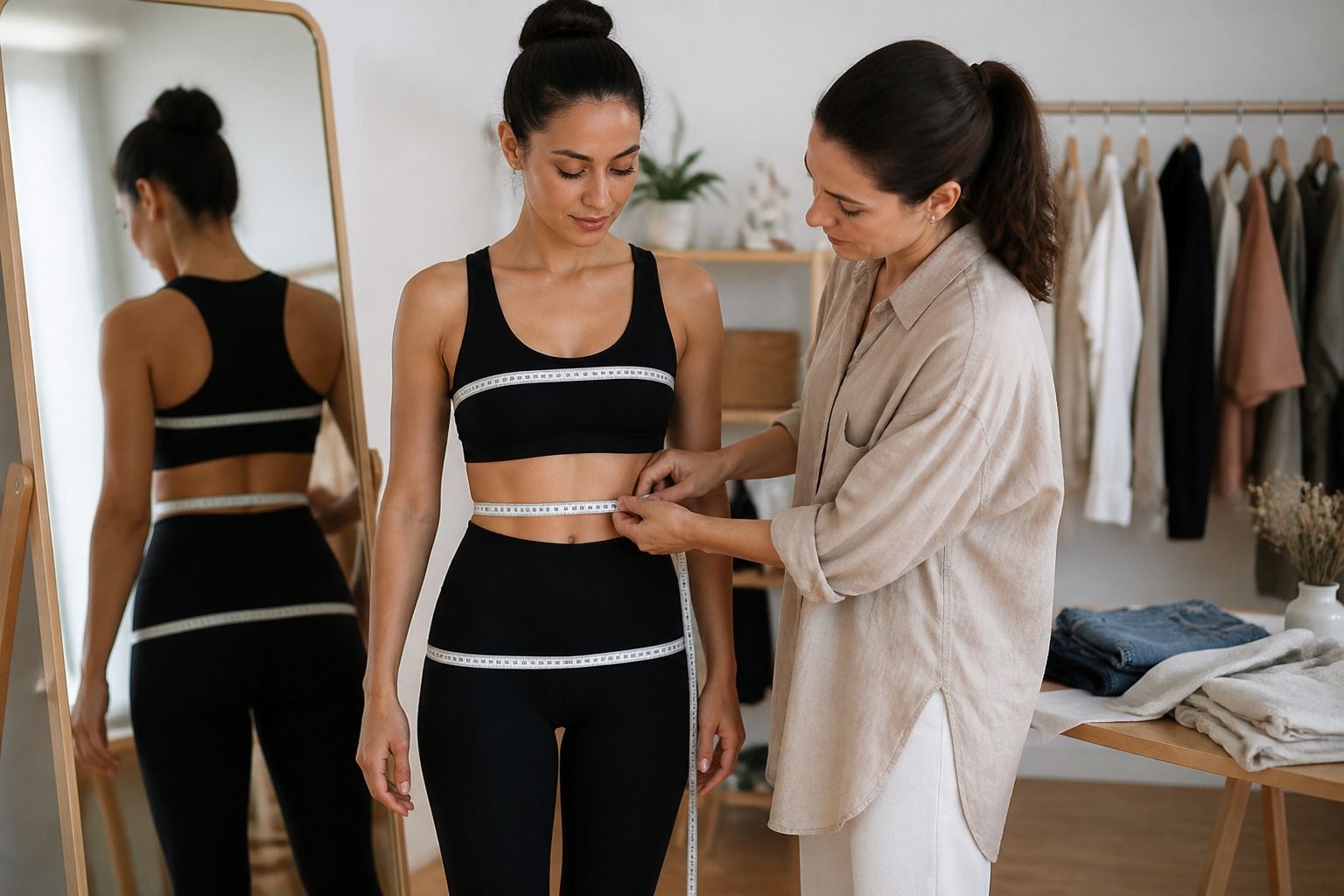
The most useful answer to “what are the best jeans for my body shape?” is usually not a body-type chart. It is a pair that stays put at the waist, sits smoothly through the seat, and lets you walk, sit, and bend without needing a running commentary. Labels such as relaxed, curvy, mom, or sculpt are inconsistent from one brand to another. The measurements and the mirror are more dependable.
Start with the rise, not the label on the back pocket
Rise is the distance from the crotch seam to the top of the waistband. It decides where the jeans interrupt your outline, so it often matters before the leg shape does. A high rise can meet the narrowest or most comfortable part of your torso; a mid rise may feel calmer if a high waistband presses when you sit. Low rise is not a mistake, but it needs a deliberate waistband fit because it has less torso to hold onto.
Check the seat and hip fit before judging the front view
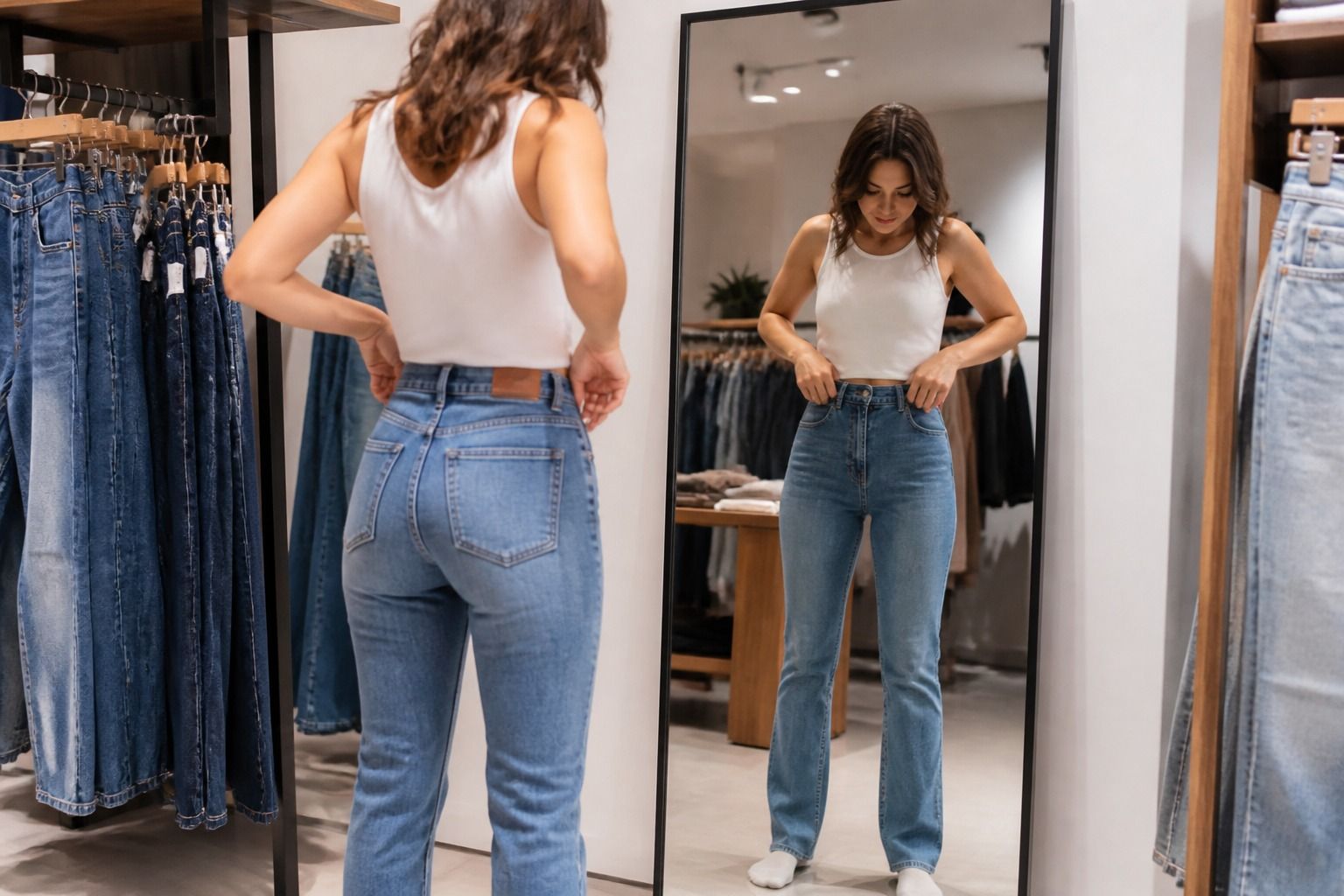
A good front mirror view can hide a bad seat fit. Turn around or use a phone photo from the side and back. The seat should follow the body without horizontal pulling across the fullest area, a sagging fold below it, or a crotch seam that feels forced forward. Wrinkles happen in denim; a set of sharp strain lines every time you take a step is useful information, not something to dismiss as new-jean stiffness.
Pocket placement changes the visual read, but it cannot rescue a poorly fitting seat. Pockets set very low or far apart can look different from a higher, centered pair, yet comfort still comes first. Check whether the pocket edges sit flat and whether the yoke seam lies smoothly. If a pair only looks right while you are standing still under bright fitting-room lights, give it another five minutes.
Denim with elastane deserves one extra check: stretch recovery. Squat once, walk to the mirror, then look at the knees and seat. A little give makes errands and desk days easier. Too much fabric can relax quickly and leave the jeans feeling a size larger by mid-afternoon. A firmer pair may need a few wears to soften, but it should never require endurance.
Use leg shape to change the outfit’s rhythm
Straight-leg jeans are a reliable starting point because the line falls fairly evenly from thigh to hem. They work with trainers, loafers, ankle boots, and most outerwear without asking for a complicated outfit. If you are comparing jeans for body type, this is often the sensible control pair: it tells you what a neutral leg opening feels like before you move to a more expressive silhouette.
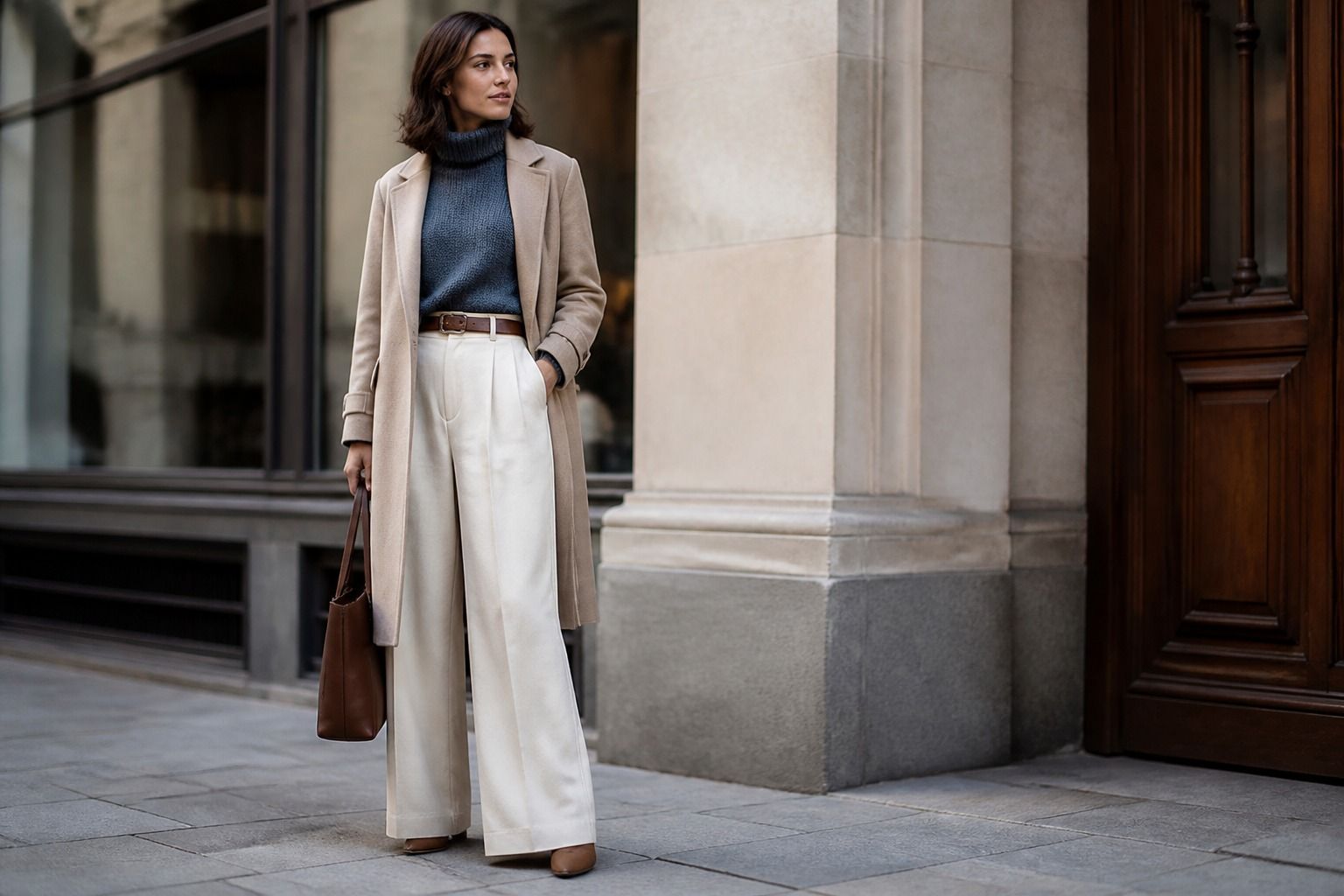
Wide-leg jeans create more space around the lower body and usually need attention at the hem. A full-length wide leg can skim the top of a shoe; a cropped version changes the balance by showing ankle and footwear. Bootcut and subtle flare jeans are narrower through the thigh and open below the knee. They can echo the width of a shoe or a structured shoulder, but the hem should not drag or buckle around the ankle.
| Leg shape | Useful fitting check | Often works well with |
|---|---|---|
| Straight leg | Fabric should fall cleanly from thigh to hem | Most shoe heights and everyday layers |
| Wide leg | Check the hem with your usual shoes | Shorter tops, tucked shirts, substantial footwear |
| Bootcut | Make sure the flare begins below the knee | Boots, heeled shoes, longer jackets |
| Tapered leg | Look for pulling at calf and ankle | Chunkier knits and ankle boots |
No leg shape is required to “balance” you. The practical choice is the one whose hem and volume make the clothes you already own easier to use. Bring one jacket or wear your normal shoes when shopping; they reveal more than an isolated mirror test.
Do a movement test before removing the tags
How should jeans fit? They should cope with ordinary life. Walk the length of the shop, take a normal stair step, sit, lean to pick up a bag, and cross one leg over the other. Notice the exact place that asks for attention: waistband, crotch, hip, thigh, knee, or hem. A fitting-room pose lasts only a moment; a commute, a meal, and a chair are not.
Check the crotch seam without being overly forensic. It should not pinch when seated or hang so low that it bunches between the legs. Look at the inseam too. The right inseam is not always the number on the tag: some jeans are designed to stack slightly, while others need a clean break above the shoe. Photograph the side view if two lengths seem close. The photo makes bunching easier to spot than a quick glance downward.
Try the jeans with both a thin top and a knit if that is how you dress. A waistband that closes comfortably over a T-shirt may become restrictive with a tucked shirt. Conversely, buying a loose pair for one bulky sweater can leave you pulling it up on every other day. Choose for the most common version of your wardrobe, not an imaginary future outfit.
Use alterations for length and waist, not for every problem
Hemming is one of the most worthwhile adjustments. A small change can stop a straight leg from pooling or let a wide leg clear the ground with the shoes you wear most. Bring those shoes to the tailor. The difference between flat trainers and a low heel is enough to change the result, especially with raw hems and bootcut styles.
Taking in a waistband can help when the hip and seat fit well but there is a modest waist gap. Ask a tailor whether the back seam, darts, or waistband construction will keep the pockets and yoke looking natural. It is usually less convincing to alter a pair that is tight across the hip just to make the waist match. There needs to be enough fabric and ease in the right places from the start.
Keep notes after a few wears: rise, inseam, fabric percentage, size, and which shoes worked. This turns “best jeans for body shape” from a vague search into a personal record. Eventually you will know that one brand’s high rise is your everyday mid rise, or that a certain leg opening needs a hem. That knowledge is more portable than any label.
One final detail is worth noticing at home: wash and wear the jeans before deciding they belong in the regular rotation. Sit through a meal, carry a bag, and look at the knees at the end of the day. If the waistband stays comfortable and the fabric returns close to its original shape, you have learned something useful about that cut. If you keep choosing another pair instead, the reason is probably practical rather than mysterious. Jeans earn their place through repetition, not a perfect first mirror moment.