Clothing proportions are less about correcting a person and more about noticing where an outfit starts, stops, and asks the eye to pause. Two outfits can use the same trousers and shirt but feel entirely different because one jacket ends at the hip and the other reaches mid-thigh. Once you see those breaks, getting dressed becomes a series of small choices rather than a verdict on your body.
Use proportion when an outfit feels vaguely off
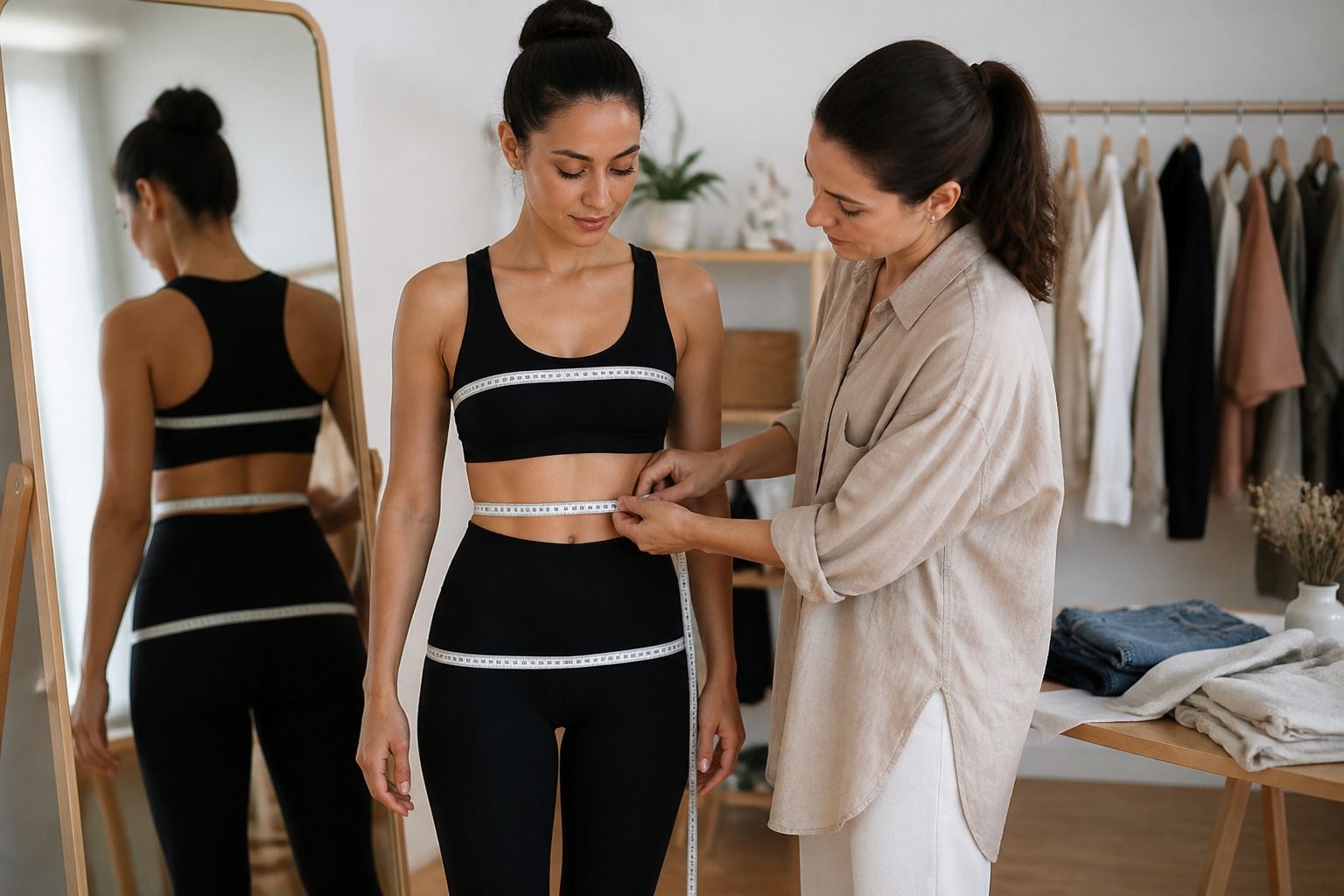
Most people know the feeling: every item is acceptable on its own, yet the combination looks unfinished. Before replacing anything, look for the vertical breaks. The waistband, shirt hem, jacket hem, boot shaft, and bag strap all divide the figure into sections. One awkward break can create the unsettled feeling. That is why body proportions clothing advice is most useful as a diagnostic tool, not a list of rules.
Read vertical lines before changing your entire wardrobe
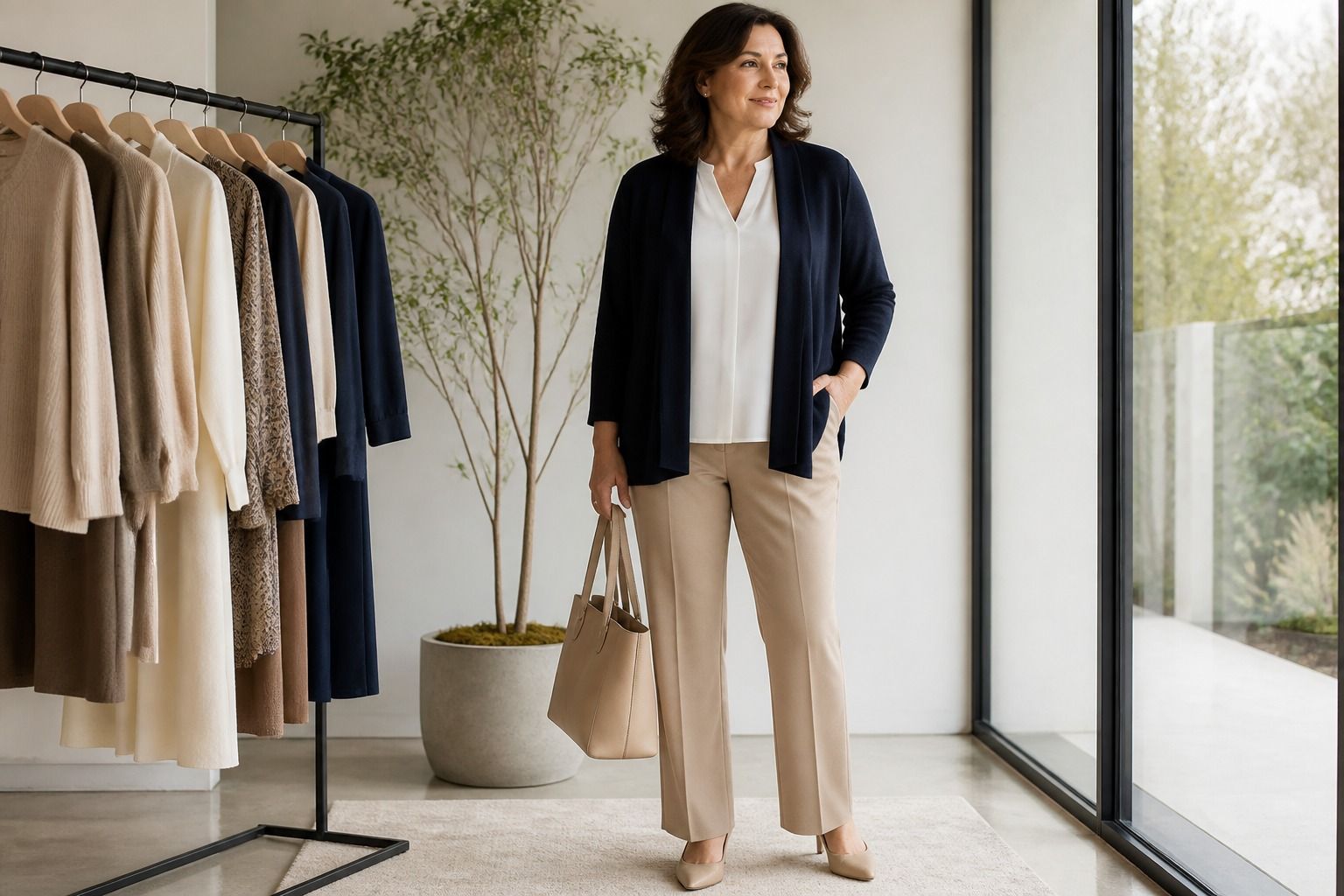
Vertical proportion comes from uninterrupted length. A top and trouser in similar values may read as one longer column, while a high-contrast belt makes a strong stop at the waist. Neither is inherently better. If you are trying to decide how to balance body proportions for a particular outfit, decide first whether you want continuity or a visible division.
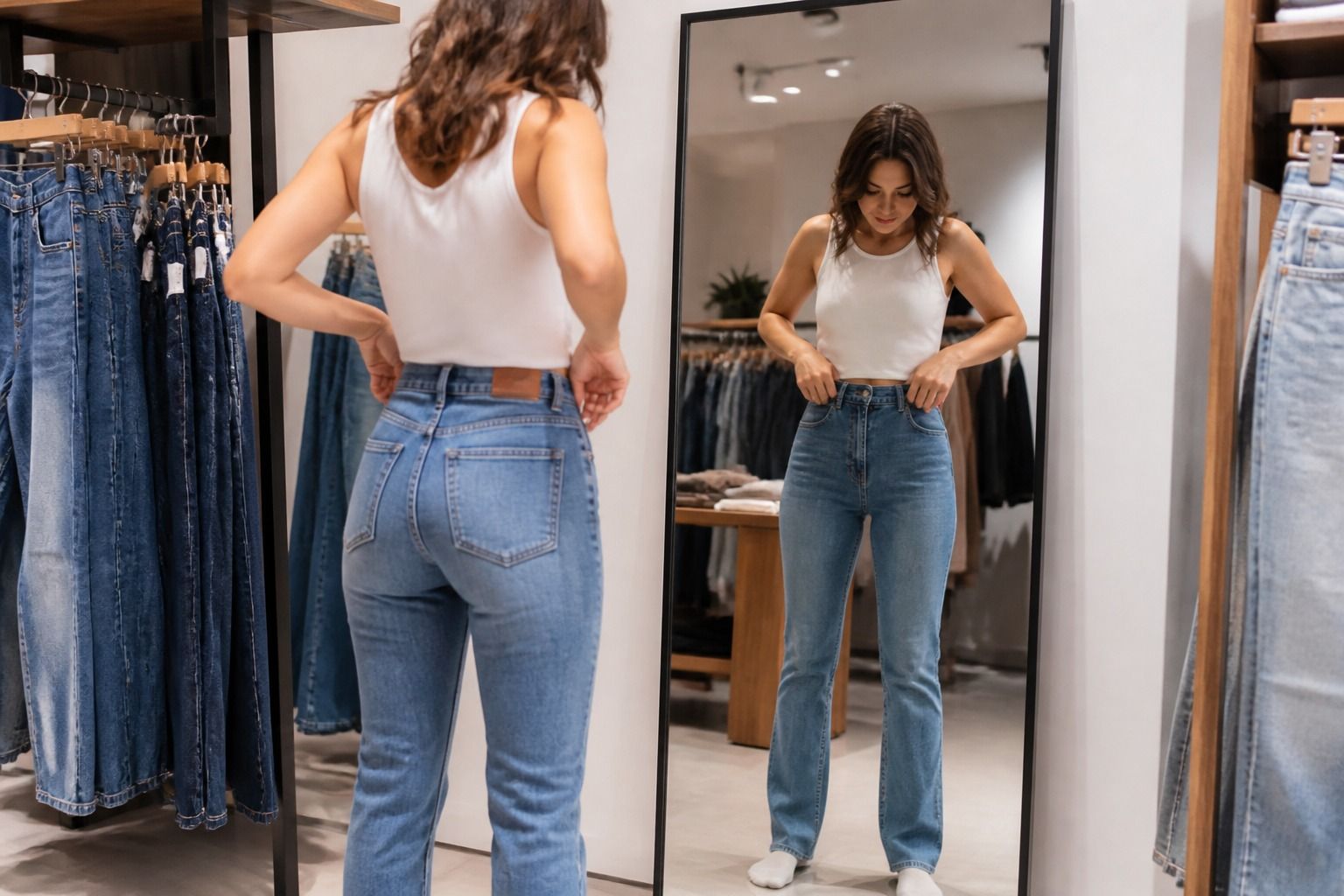
A high waist can move the visual starting point of trousers upward, especially with a tucked top. A cropped length jacket can make that waistline clearer; a longline layer leaves more room for the eye to travel. Test both with the same base outfit. The useful observation is not “this makes me look right,” but “this version feels more crisp” or “this version feels more relaxed and vertical.”
Hem placement matters most where clothing is narrow or ends against bare skin: ankle-length trousers, cropped sweaters, midi skirts, and sleeves. Stand normally rather than pointing a toe. If a hem repeatedly catches your attention, try rolling it once or compare another length. A minor adjustment is often enough; there is no need to make every outfit conform to one formula.
Match the scale of details to the outfit, not a category
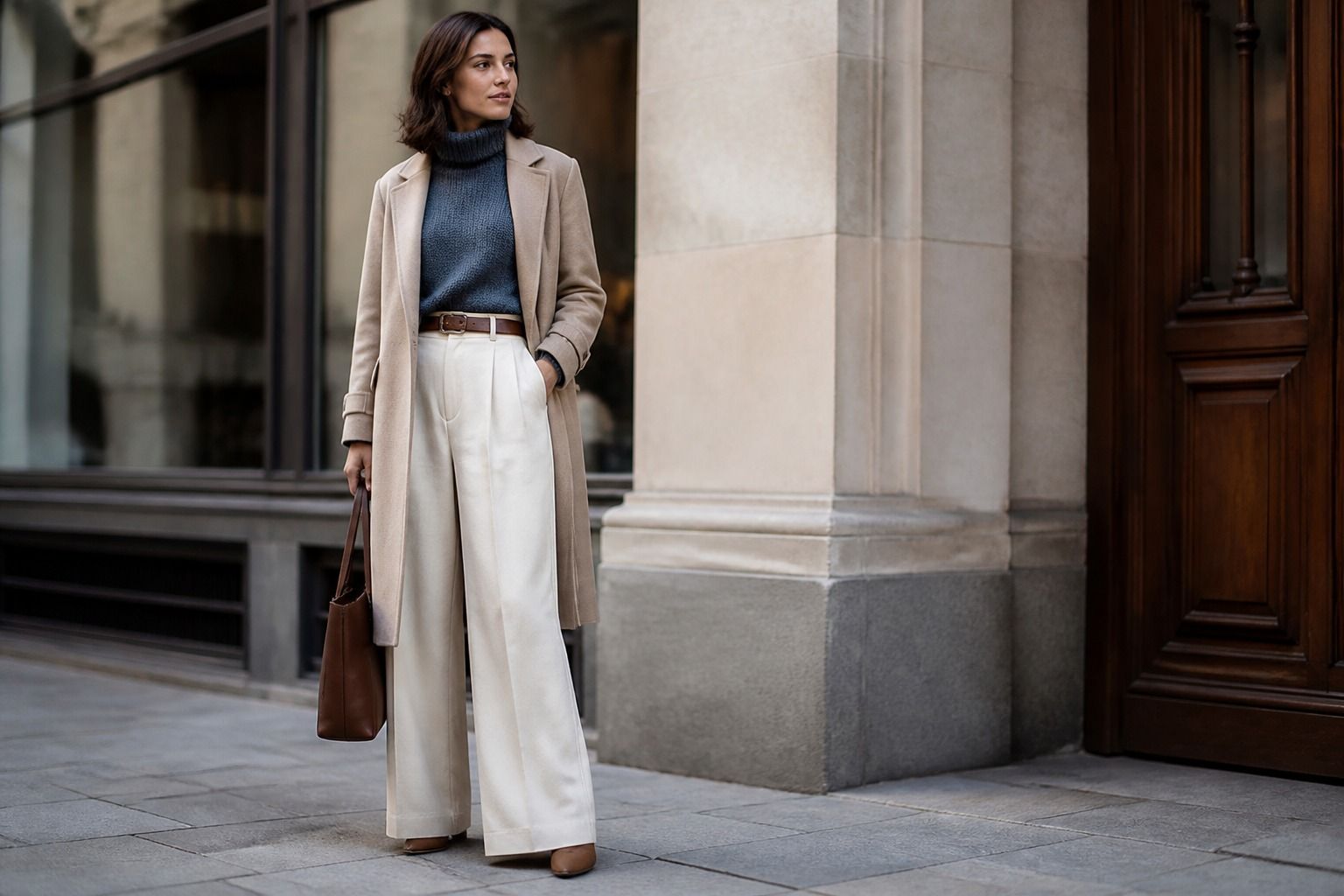
Scale is the size of visible elements relative to one another: a broad lapel, delicate chain, large tote, tiny floral print, heavy sole, or oversized cuff. Problems tend to appear when one detail speaks at full volume while the rest of the outfit is whispering. A very small bag can vanish against a long textured coat; a dramatic belt can become the only thing you notice in a quiet column of knitwear.
Use the mirror at a normal social distance, not only at arm’s length. A fine pendant may be enough with an open neckline, while a high-neck sweater may call for earrings, a scarf, or no jewellery at all. The right scale depends on fabric and shape as much as height or body shape. Thick denim and a leather boot can carry more visual weight than a silk shirt and slim loafer.
| Outfit element | What to compare | Simple adjustment |
|---|---|---|
| Bag | Its size against coat or trouser volume | Try a medium bag with fuller outerwear |
| Jewellery | Its visibility against neckline and fabric | Change length before adding more pieces |
| Footwear | Sole weight against the trouser hem | Compare a sleeker and a sturdier shoe |
| Pattern size against the garment silhouette | Keep other focal points quieter |
This is why universal prescriptions rarely hold. A wide belt might feel visually strong with a fitted dress and completely at home with a structured coat. The surrounding lines decide whether it is a useful focal point or just an interruption.
Place contrast where you want the eye to land
Contrast is a practical steering wheel. It can come from colour, light versus dark value, texture, shine, or exposed skin. A white collar under a dark jacket draws attention upward. Bright trainers pull the eye down. A glossy bag against matte wool becomes a focal point even when its colour is neutral. None of this has to be strategic every morning, but it helps when an outfit needs a clearer center.
Choose one or two obvious points of interest and let the rest support them. If the shoes, belt, neckline, earrings, and bag are all strong contrasts, the outfit can feel busy even when every item is attractive. Try removing one element before buying something new. The easiest edit is often a quieter belt or a bag that repeats an existing colour.
Use contrast for function too. A bright layer can make a practical rain outfit feel intentional. A dark longline cardigan can soften the boundary between two colours you enjoy but would not normally pair. Clothing proportions become easier to manage when colour and length are treated as parts of the same composition.
Build a repeatable two-minute outfit check
Before leaving, look at the full outfit in daylight or near a window. First, identify the longest line: perhaps trousers to shoe, a dress to boot, or a coat over matching trousers. Second, identify the strongest horizontal break: waist, hem, cuff, or bag strap. Third, identify the focal point. If all three answers are clear, the outfit usually feels resolved even if it is not conventionally “balanced.”
Then move. Lift your arms, sit down, put on the coat, and carry the bag you will actually use. A longline layer may look elegant until it catches on a crossbody strap; cropped trousers may need a different sock with loafers. These are not failures of proportion. They are the small logistical facts that make an outfit either wearable or frustrating.
Keep photos of combinations you reached for twice. Over time, they reveal your own dependable lengths, preferred contrast level, and favourite accessory scale. That is more useful than memorising rules about clothing proportions. You are building a visual vocabulary for your real life, not taking an exam.
It helps to keep the experiment low-stakes. Choose one familiar outfit and alter only its top length, shoe weight, or point of contrast; then take a photo in the same light. The comparison shows more than a dozen saved images of unrelated clothes. Some combinations will feel quietly right without being dramatic, and those are often the outfits that survive a busy week. Proportion is most useful when it gives you options, rather than turning the mirror into a scorecard.