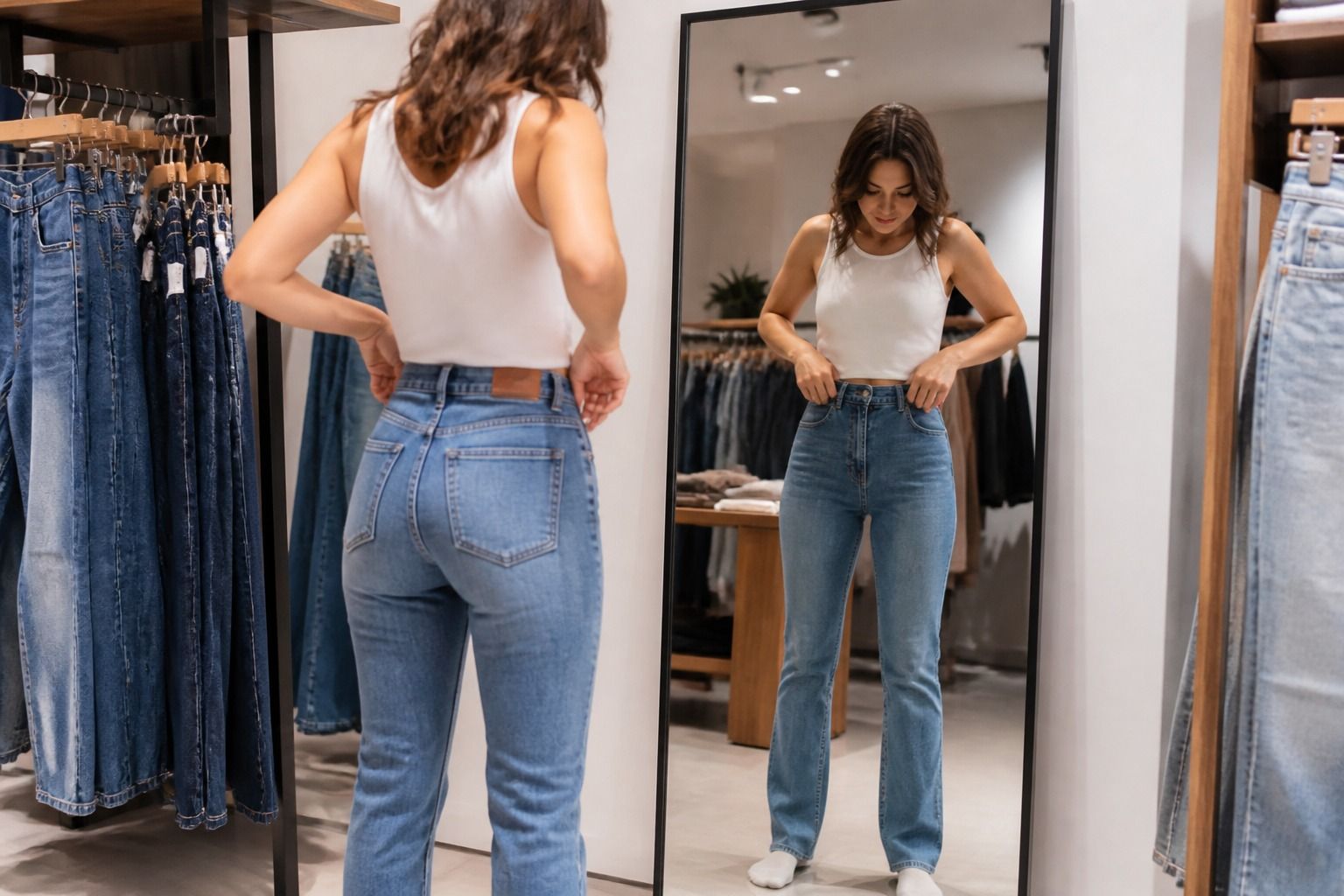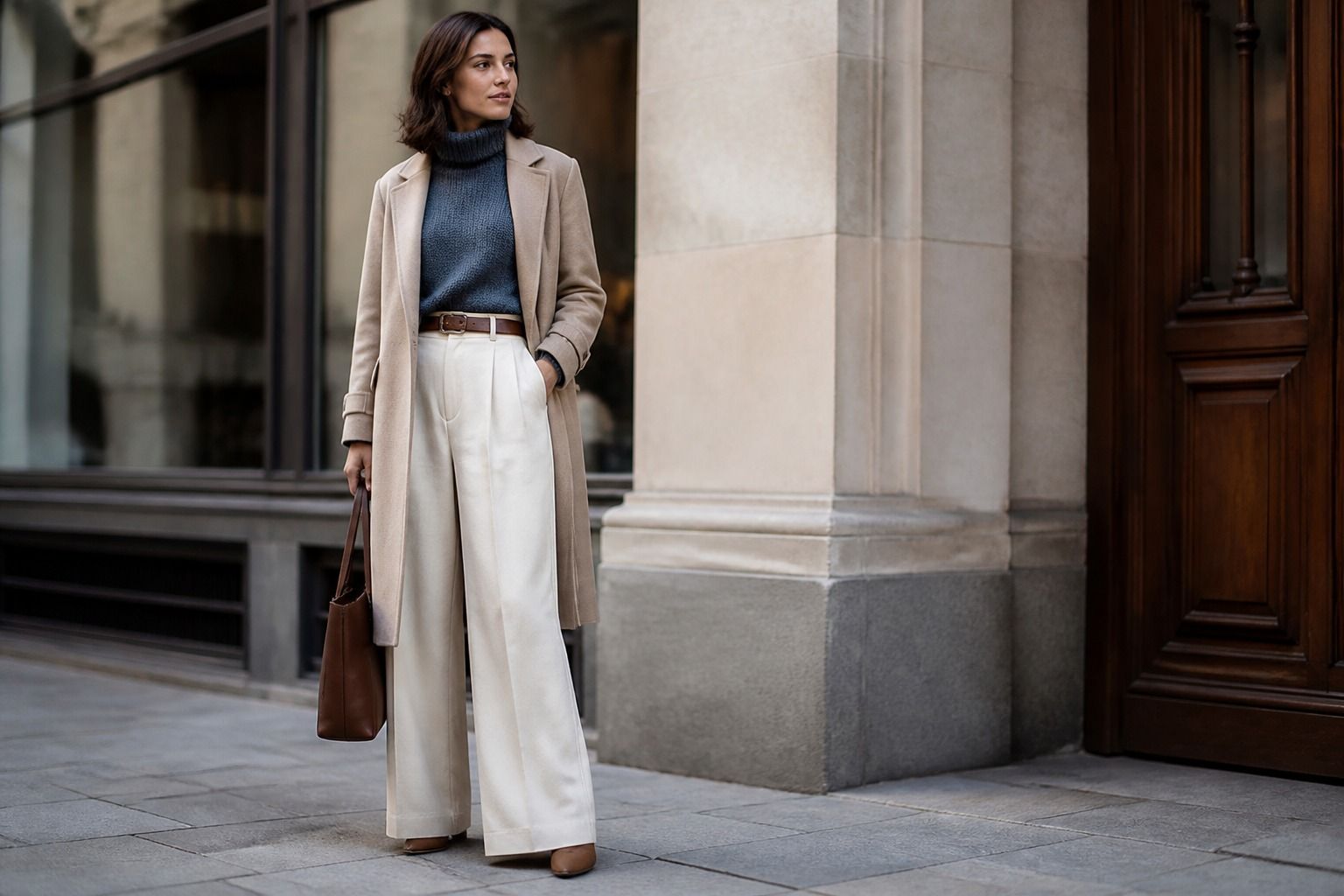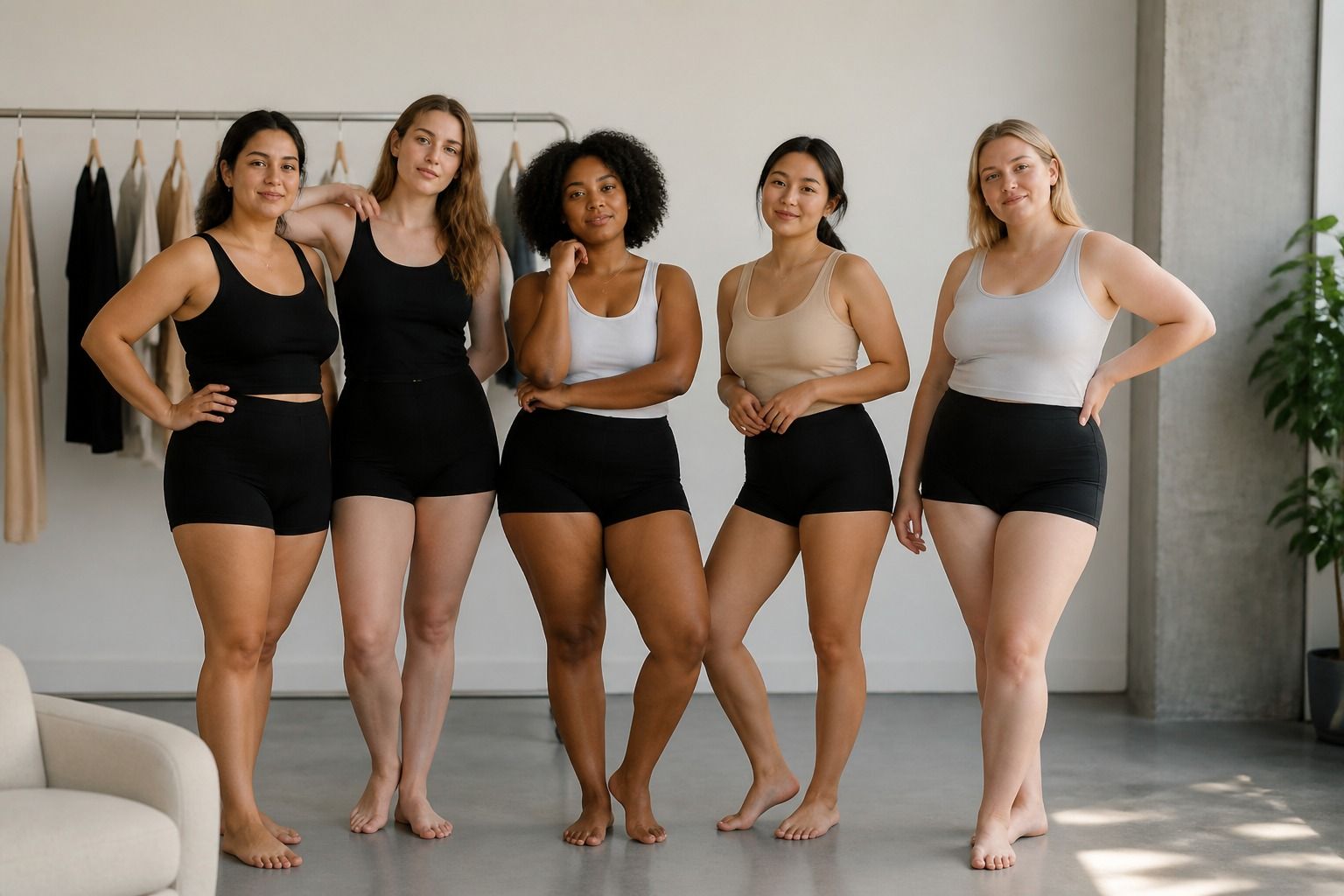
Body shape and body type are often used as if they mean the same thing, which is why a search for one can lead straight into a maze of diagrams, style systems and promises of a perfect wardrobe. They are better treated as different tools. One can help you notice proportion in a particular garment; another may offer a broader language for line and style. Neither can replace trying clothes on, reading a size chart or trusting your own preferences.
Why the terms get mixed up
Body shape categories such as apple, pear, rectangle, hourglass and inverted triangle usually compare visible proportions around the shoulders, waist and hips. They are shorthand for how clothing may hang. Body type meaning is less consistent. In everyday style writing, it may be used as a synonym for body shape. In other contexts it can refer to a framework such as Kibbe, or to older somatotype terms that were never designed as a reliable clothing-fit system.
What a body-shape label measures well
A body-shape label can be useful when you are comparing balance within one outfit. If a jacket feels narrow at the hip but roomy at the shoulder, or a dress seems to fall straight from the bust, the language of proportion gives you something concrete to test. It can suggest trying a different hem length, a softer shoulder, a more defined waist seam or a trouser with a different leg shape.
It is most helpful at the garment level. Imagine trying on three blazers: cropped, hip-length and longline. Rather than deciding which one is correct for your shape, notice which one works with your trouser rise, where it ends when your arms are relaxed, and whether the lapel sits cleanly. The label may help you generate options. Your mirror, comfort and daily routine decide which option earns a place in the wardrobe.
What the label leaves out
Body shape does not capture shoulder slope, torso length, bust shape, posture, arm length, sensory comfort or personal taste. It does not tell you whether you prefer close-fitting clothes or lots of ease, whether you cycle to work, or whether a waistband bothers you after an hour. Those are not small exceptions; they are often the facts that determine whether a garment gets worn.
Size charts illustrate the same limitation. Two dresses with the same labelled size can differ in back length, armhole depth and fabric recovery. A shape category will not predict that. Read the garment measurements when available, and test movement: sit, reach, bend and walk. If a piece needs constant adjustment, it is not made right for your current needs, whatever a chart says about flattering lines.
How style systems use a wider frame
Some style systems take a broader view. Kibbe, for example, is commonly discussed as a way of considering the overall impression of bone structure, flesh and line; followers use it to explore scale, drape, tailoring and detail. It is not the same as a body-shape chart, and it is not a medical classification. It can be enjoyable as a source of visual ideas, especially if it leads you to try a silhouette you would otherwise overlook.
Older somatotype labels are different again. They have been used in various contexts, but they do not provide a dependable shortcut to clothing fit or personal style. Treat any system cautiously when it claims to explain your personality, tells you what you should hide, or reduces a whole wardrobe to a few permissions. A good framework gives you vocabulary and then leaves room for disagreement.
Compare the tools by the decision in front of you
| When you are deciding | A body-shape lens can help with | What to check beyond the label |
|---|---|---|
| Which trouser cut to try | Where you want visual width or a longer line | Rise, seat comfort, hem and shoe pairing |
| Whether a jacket works | Shoulder-to-hip proportion and hem placement | Arm movement, back fit and fabric stiffness |
| How to build a signature look | Starting ideas for balance and contrast | Colour, lifestyle, sensory comfort and taste |
This comparison keeps body shape vs body type in proportion. Use the simpler shape lens for a specific outfit problem. Use a style system when you want a wider set of visual experiments. Use neither as an authority over a garment that feels uncomfortable or unlike you. Clothes are practical objects first; the theory only earns its keep when it improves the practical result.
A better way to use labels
Make labels provisional. Instead of saying, I am this shape so I cannot wear that, try: this cut sometimes needs a different neckline, hem or fabric weight on me. Keep a few notes or photos of outfits that worked on real days. Record why they worked: the trouser did not crease when seated, the open shirt made a simple outfit feel finished, the dress had enough room for a long lunch and walking home.
Over time, you will build a more precise personal system than any body-shape categories can offer. It may include a few repeatable proportions, preferred sleeve cuts, useful shoe weights and fabrics you trust. The labels remain available as a low-stakes way to search for ideas, but the final standard is uncomplicated: does the clothing fit your life, move with you and make you feel at ease?\n
That approach also makes online advice easier to filter. Keep the parts that give you a useful experiment, such as trying a longer jacket or a different trouser rise, and leave the rest. You do not need to earn a silhouette or correct a proportion. A label is doing its job when it expands your options, then fades into the background once you know what works.
Keep the test simple: wear it for ten quiet minutes at home, move normally, and notice whether you forget about the garment or keep negotiating with it. That answer is useful data, not a failure of taste.
Use the same patience with recommendations from people whose wardrobes look nothing like yours. A formula may work because of their climate, job, preferred shoe height or tolerance for fitted fabric, not because it is universally right for a category. Translate the useful part into a small test: change one hem, add a layer, try a softer fabric. If the result improves how you move through your day, keep it. If it does not, the label has already given you all it can.