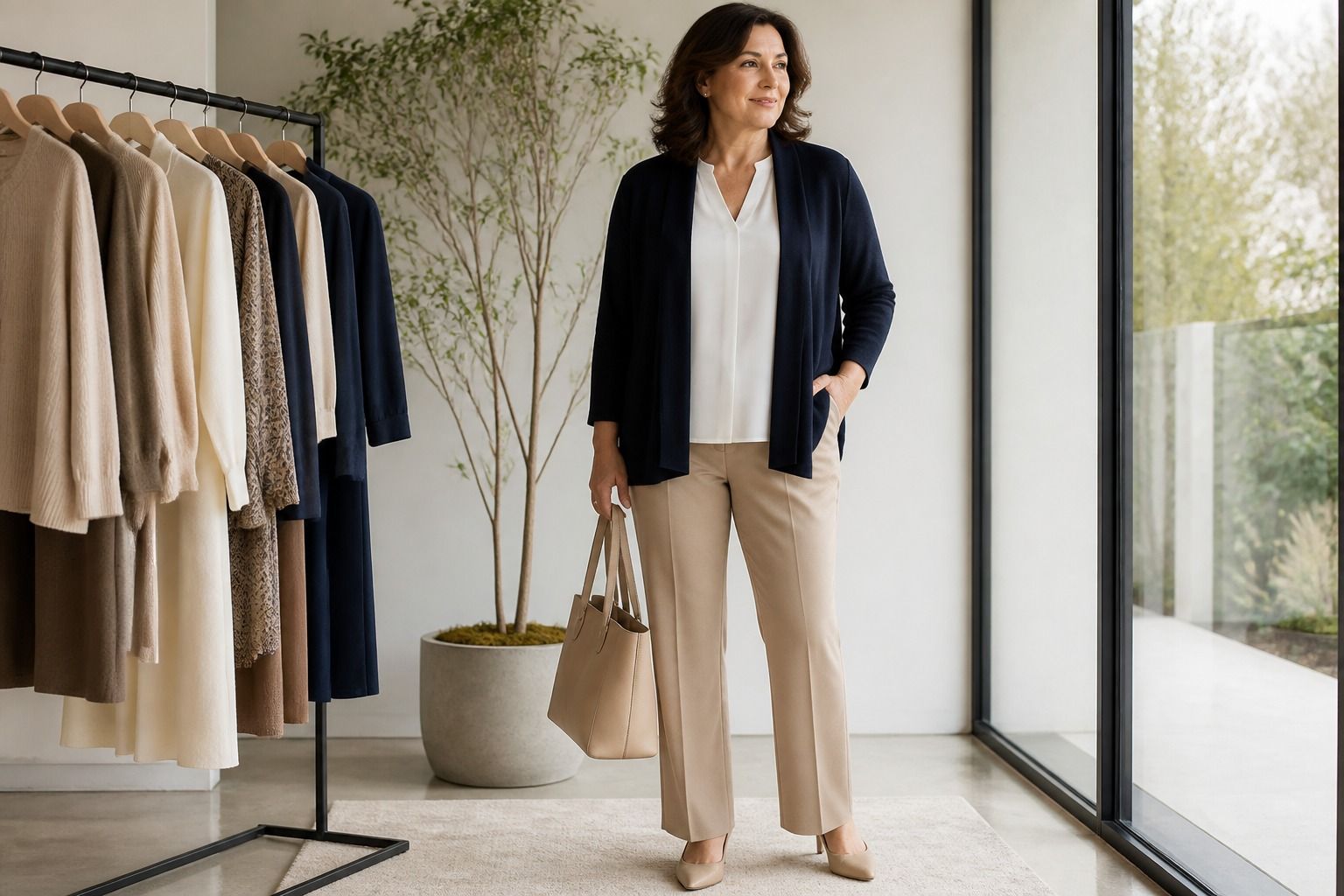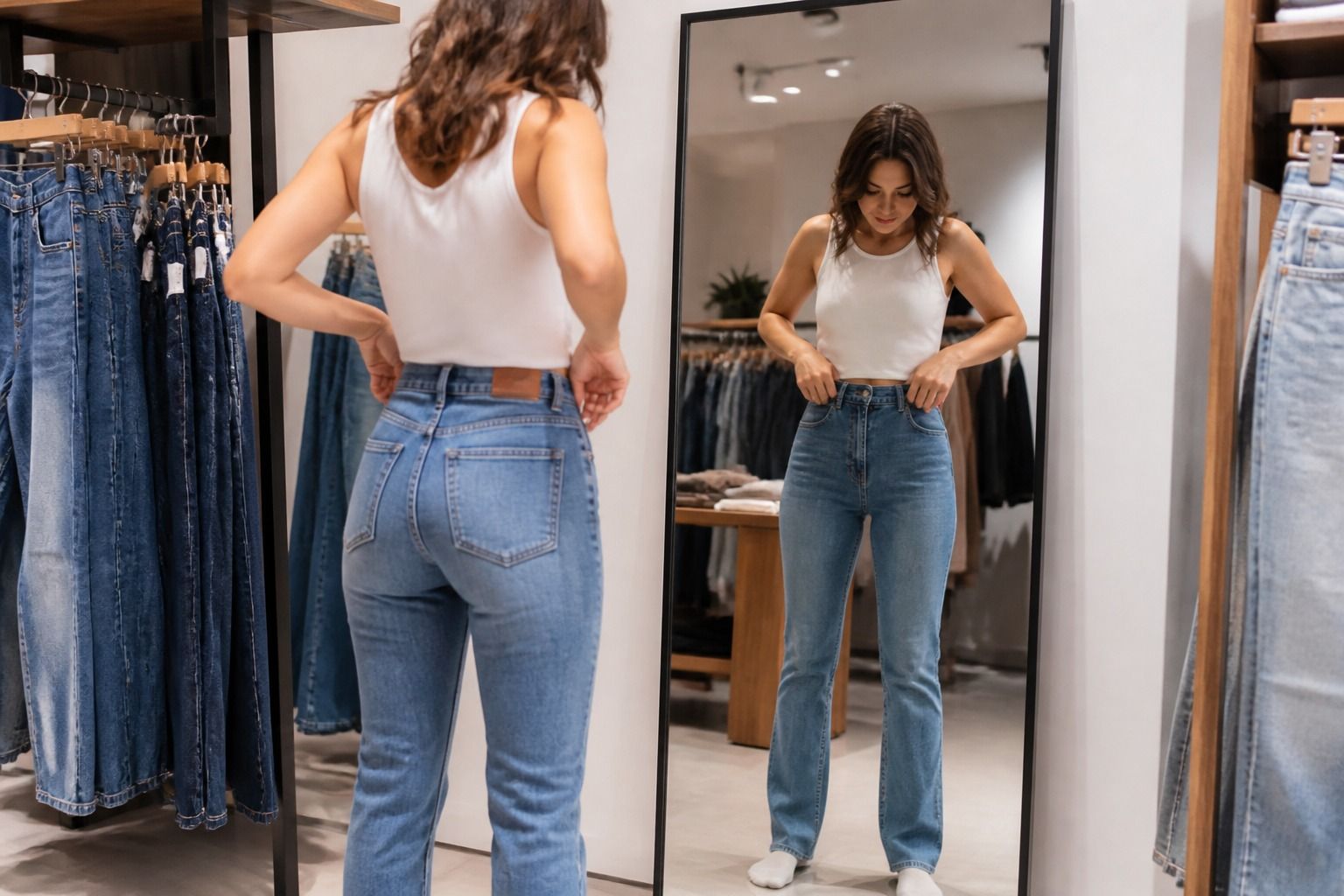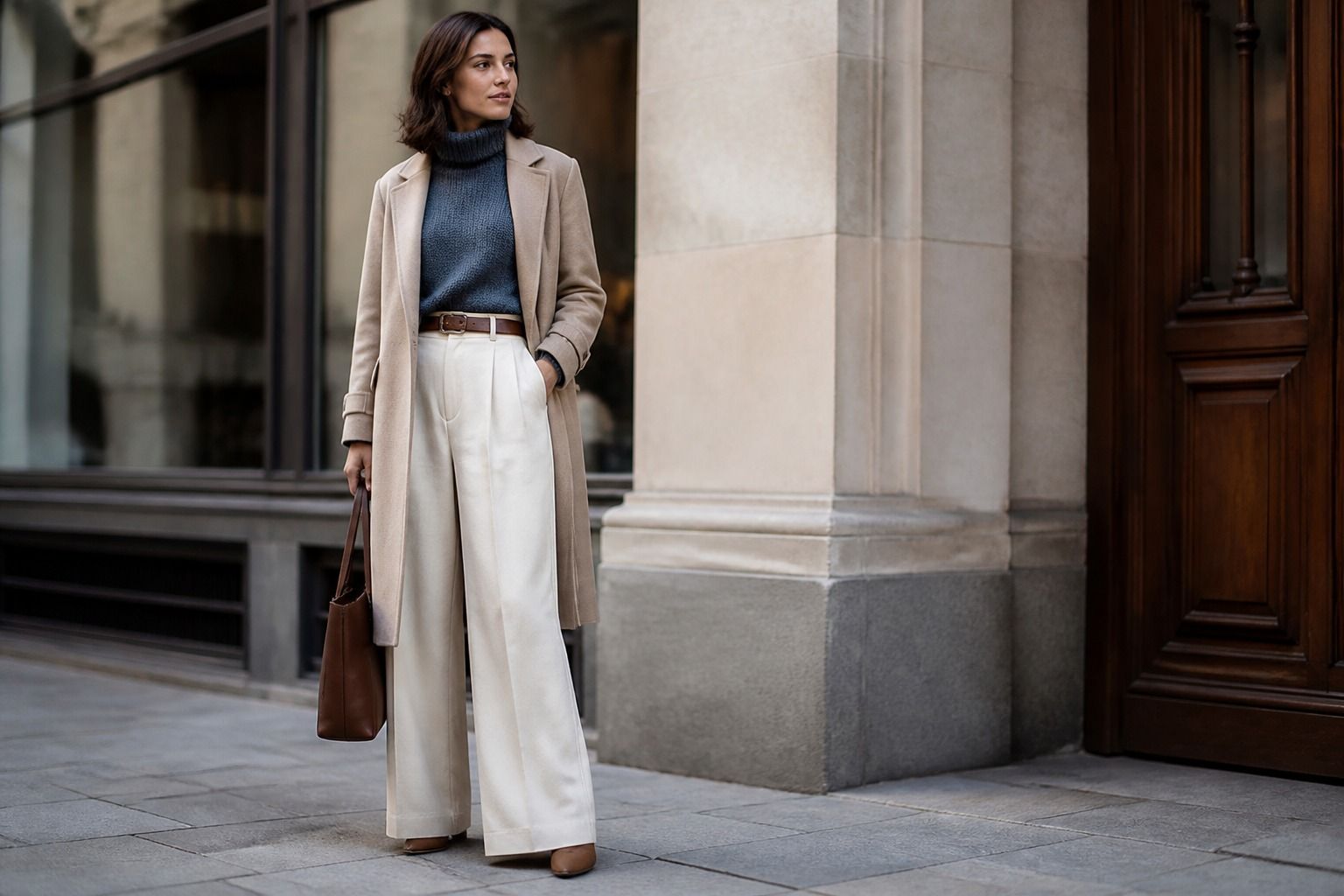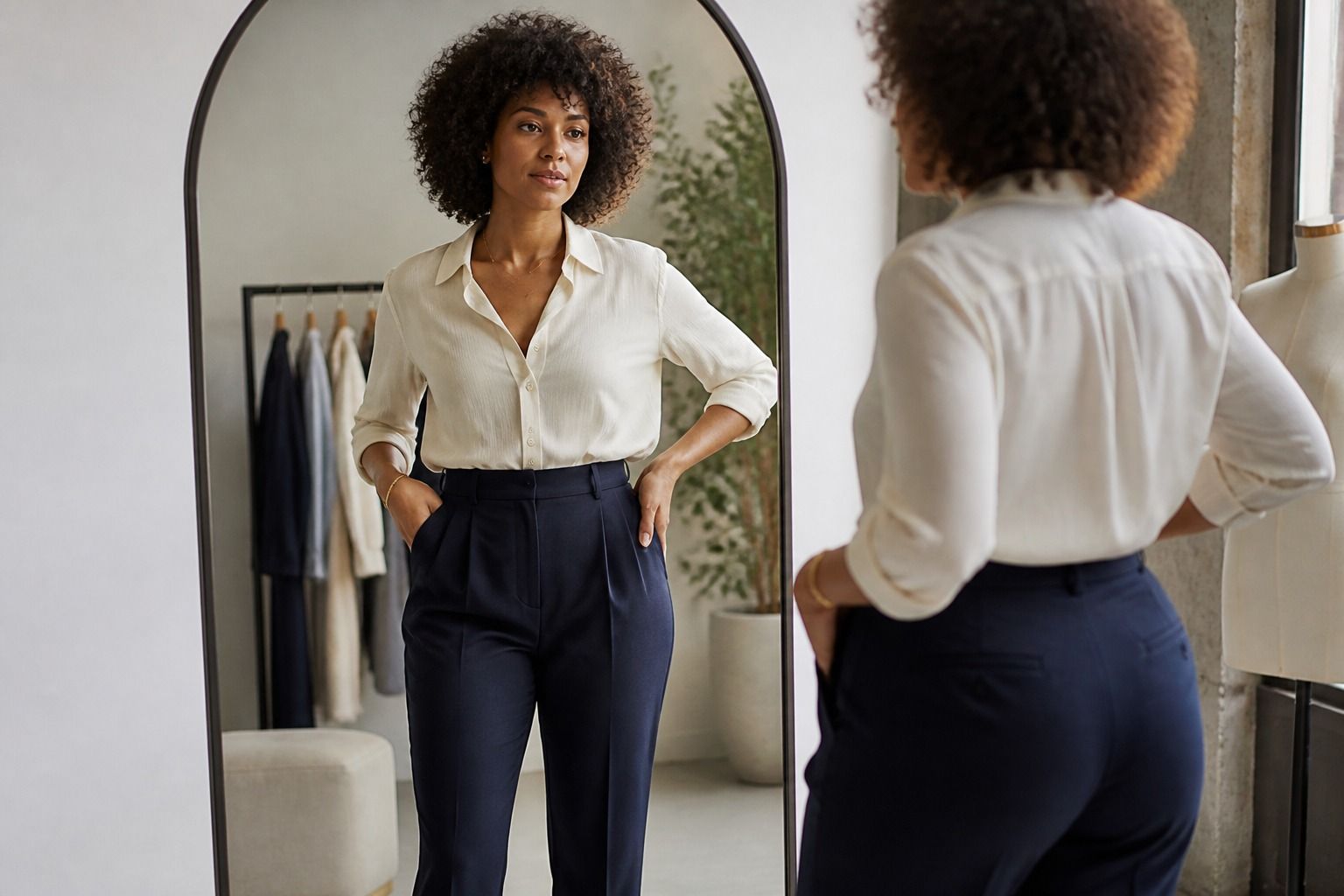
Learning how to dress for your body shape does not require a list of forbidden clothes. A better starting point is whether a garment gives you the movement, proportion, and ease you want on an ordinary day. Shape labels can suggest experiments, but fit is the evidence: it is there when you lift a bag, sit on a train, and catch your reflection after several hours.
Replace rules with one fit-first question
Before asking whether a style is “for” you, ask: does this garment sit where it is meant to sit and let me move? A blazer can look tailored on the hanger yet have shoulder seams that drop too far, a collar that stands away from the neck, or sleeves that make reaching for a cup awkward. Those details change the silhouette more than a generic body-shape rule ever will.
Notice the three things a measurement chart cannot show
Measurements are useful for choosing a size, but they cannot show ease, balance, or movement. Ease is the extra space that lets a garment work with you. A woven shirt may measure correctly at the chest and still pull across the upper back when you reach forward. Trousers may fit the waist but have a rise that makes sitting uncomfortable or creates a distracting crease.
Balance is what happens when top, bottom, shoes, and layers meet. The same straight-leg jean can look quiet with a short knit and quite different with a long coat. Movement is the final check: watch a skirt while walking, see where a sleeve ends when your arm bends, and notice whether a hem rides up when you sit. These observations are more helpful than judging a body from a tape measure.
| Garment area | Practical check in the fitting room |
|---|---|
| Shoulder seam | Lift both arms; the seam should not dig in or slide far down your arm. |
| Chest and back | Reach forward as if holding a steering wheel; check for pulling or gaping. |
| Rise | Sit for two minutes; make sure the waistband stays comfortable and in place. |
| Waist placement | Try the top tucked and untucked; see which proportion feels intentional. |
| Hem | Walk, turn, and view the garment with the shoes you will actually wear. |
Test an outfit at home before you decide it works
Bring the fitting room into a normal setting. Put on the complete outfit, including shoes and outer layer, then take a full-length photo from several steps away. Walk up stairs, sit on the sofa, bend to pick up a bag, and look at the outfit in a window reflection. A mirror pose can disguise a hem that twists or a jacket that only works with your shoulders held very still.
Make one change at a time. If the outfit feels off, try a different shoe before replacing the trousers; try a belt position before deciding the dress has the wrong shape. A half-tuck, sleeve roll, or shortened hem can alter proportion quickly. Keep a short outfit note on your phone: what felt good at first, what annoyed you later, and whether you would choose it again without needing an occasion to justify it.
Build a small rotation from proven pieces
A reliable wardrobe begins with repeats, not aspirations. Choose a few garments that pass the movement test: perhaps one trouser shape, one skirt or dress, two tops with different sleeve lengths, a layer, and shoes you can walk in. Photograph the combinations. When you know that a certain rise, neckline, and jacket length work together, getting dressed becomes much less theatrical.
Give each piece more than one partner. A useful blazer should work with your everyday trouser and at least one softer option; a favourite dress should have a layer that does not flatten its shape. This is where body-shape advice becomes practical. Rather than buying every item said to flatter a category, you learn the proportions that make your own small rotation flexible.
Use fabric and finish to adjust a silhouette
Cut is only half the story. A structured cotton shirt holds a different line from a fluid viscose blouse, even when the collar and length match. A dense knit can add visual weight; a fine knit may follow the body more closely. If a silhouette feels too severe, a softer fabric can change the mood. If it feels vague, a cleaner edge or firmer textile may supply enough definition.
Pay attention to finishing details as well: button size, pocket placement, belt width, and the shine of a shoe. They are small, but they direct the eye. Test them against the full outfit, not against a product photo. The aim is not to create an optical illusion; it is to make the clothes read as deliberately chosen and comfortable to wear.
When tailoring matters more than a new shape category
Many almost-right clothes fail at one adjustable point. A tailor can shorten sleeves, refine a trouser hem, move a waist seam, narrow a shirt through the torso, or improve the break of a jacket. Start with garments that fit the largest or least adjustable area, often shoulders, upper back, or hip. Altering everything is expensive, but a simple hem or waist adjustment can rescue a frequently worn piece.
Take the garment in with the shoes and underlayers you normally use. Explain the real problem in plain terms: “The waist sits too low when I walk,” or “The sleeve catches on my watch.” That gives better information than asking to be made more flattering. The most useful way to dress for your body type is ultimately to build clothes around your life, your comfort, and the proportions you enjoy seeing.
Keep a simple record of successful adjustments. A photograph of the finished hem, the name of a trouser rise you like, or a note that your best jackets need room through the upper arm will save time later. This is more durable than memorising rules for a named shape. With a few reliable details in hand, you can assess a new garment quickly and leave the shop with clothes that belong in your real rotation.
Seasonal layers are a useful stress test for this method. An outfit that feels balanced indoors can change completely under a raincoat, scarf, and backpack. Before buying a new outer layer, put it over the trousers, knitwear, and shoes you actually wear most often. Check whether the shoulder seam still lets you reach a ticket machine, whether the hem works when seated, and whether the pockets are accessible. A coat does not need to create a particular outline to be successful; it needs to work with the proportions and movement of the rest of your day. That practical standard keeps a wardrobe from filling with beautiful single-purpose pieces.