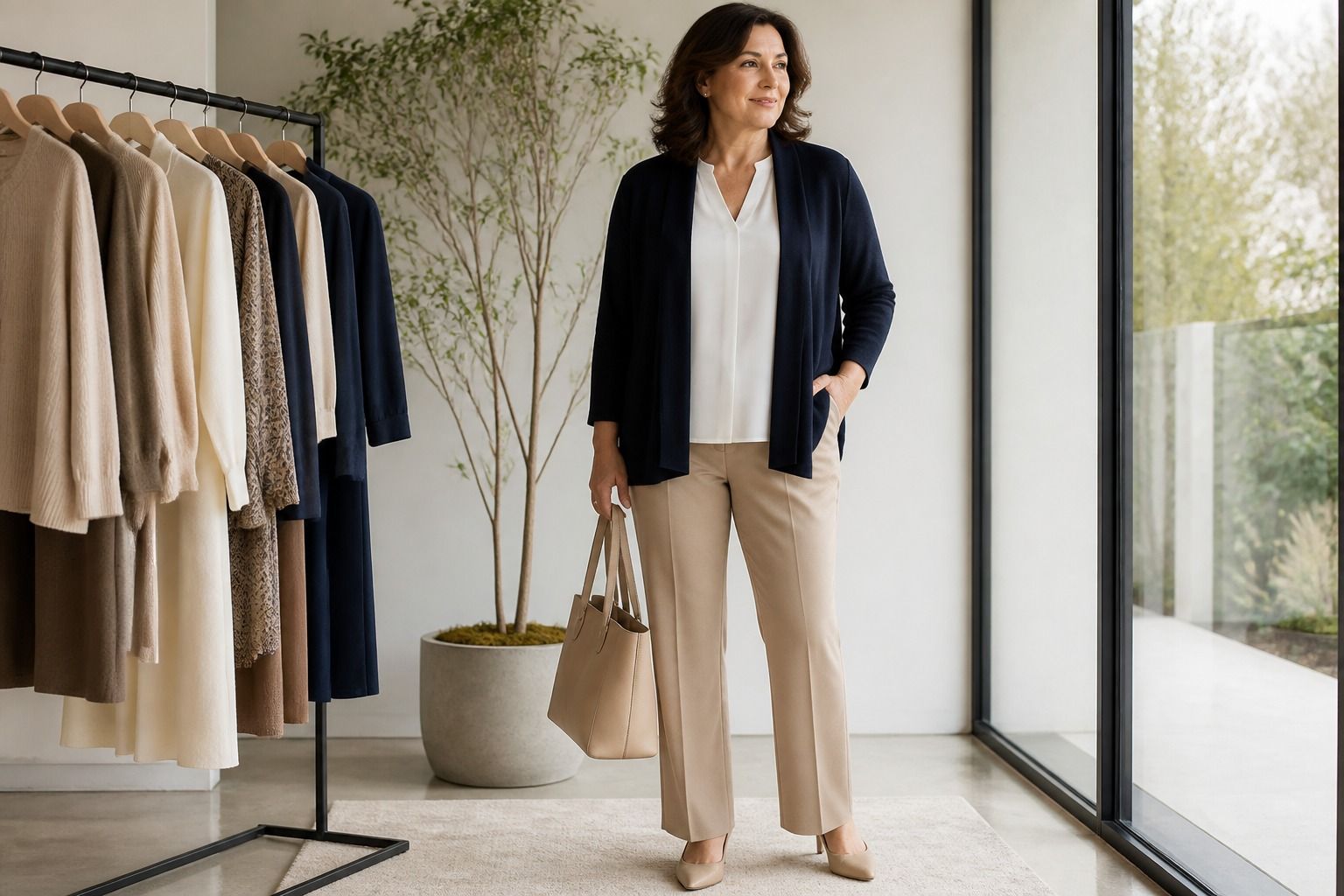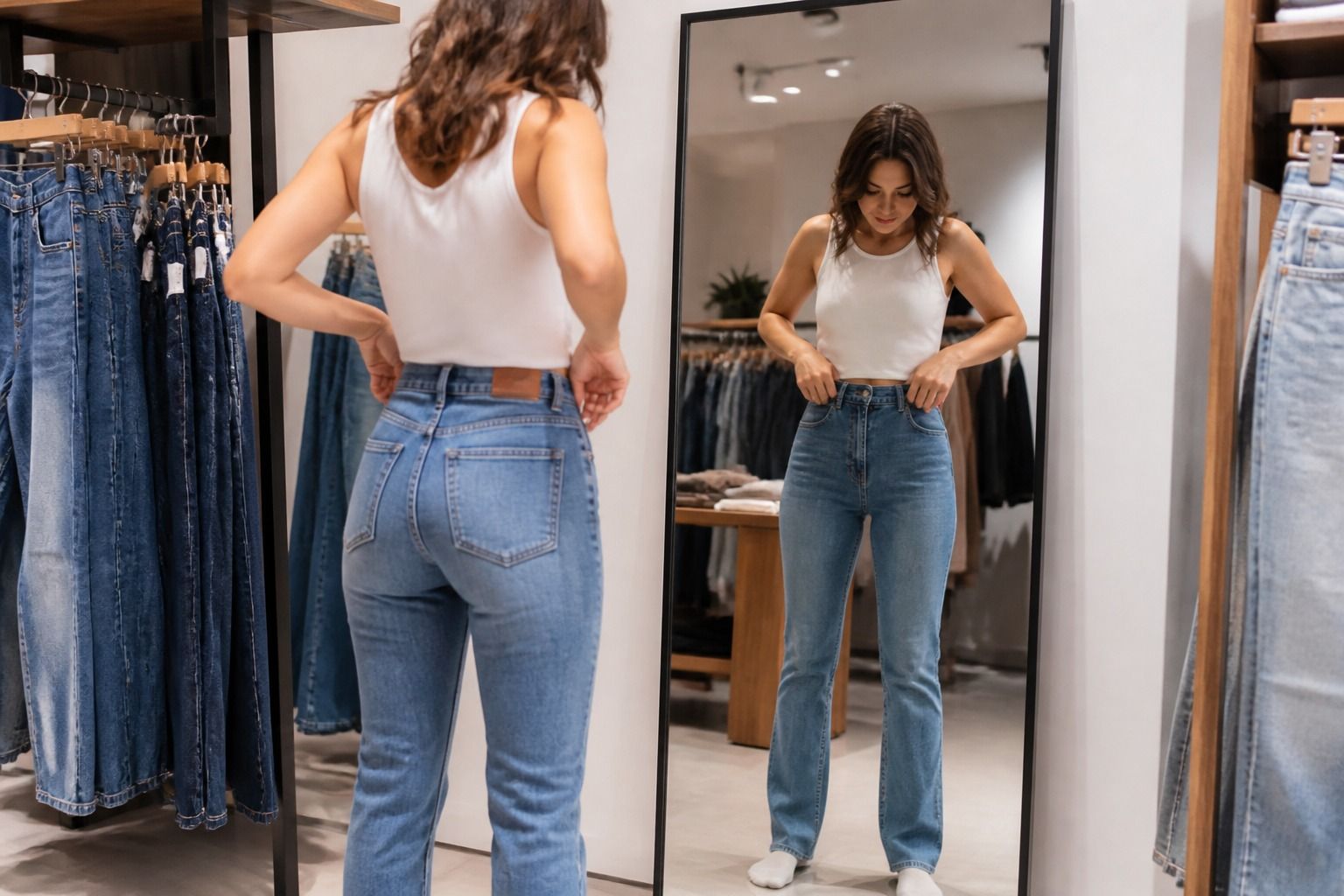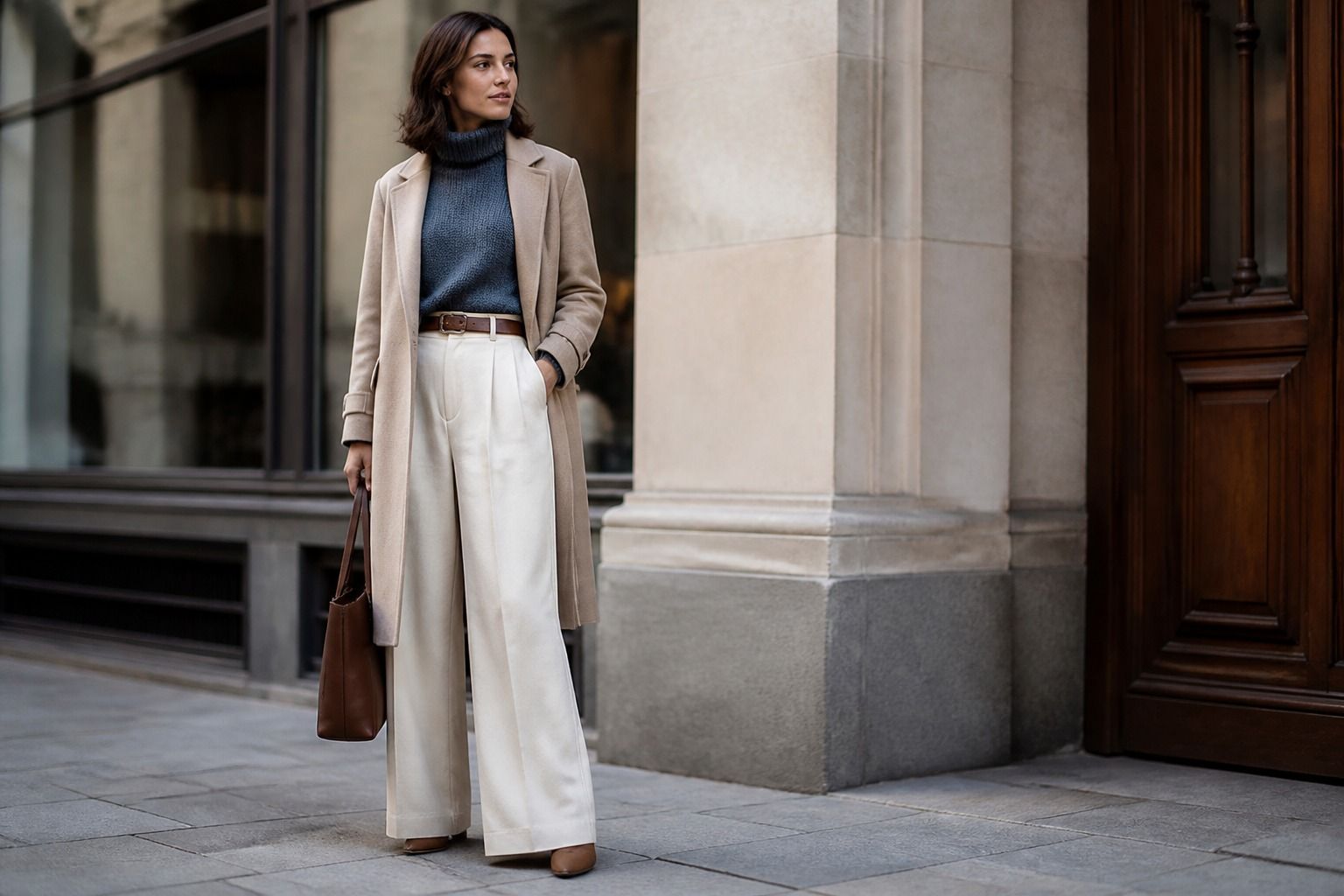
The hourglass body shape is often reduced to a cartoon outline and a list of tight clothes. In real wardrobes, the more useful question is usually where a garment recognizes your waist without making the rest of you feel trussed up. A good outfit can follow the body's existing lines, or it can ignore them entirely for a relaxed column shape. Both are valid; the point is to know what each choice asks from the fit.
How the hourglass label is usually used
“Hourglass” generally describes a defined waist with bust and hips that appear relatively balanced in width. It is a proportion label, not a dress code. Two people with an hourglass body type can need very different clothes because one has a long torso, another has a short waist, one prefers crisp cotton, and another lives in fluid knitwear. Shoulder slope and bust placement also change how a neckline or jacket front sits.
Where ready-to-wear can pinch or pull
Ready-to-wear often uses one pattern block to cover several proportions. On an hourglass shape, a blouse can fit the bust but stand away at the waist; trousers can accommodate hips and leave a gap at the back waistband. A fitted dress may look promising until the zipper pulls across the ribcage or the waist seam rides upward when you sit. These are construction issues, not signs that your body is difficult.
Check fit in motion before deciding. Raise your arms, sit down, take a long step, and turn sideways. Look at the side seam and the back waist, not only the front mirror view. A small alteration often solves the real issue: taking in a waistband, moving a button, shortening a shoulder strap, or choosing a size for the fullest point and adjusting the rest. Leave enough ease to breathe and reach; definition should not require bracing yourself all day.
Choose shapes that follow rather than squeeze
Wrap dresses, softly belted shirt dresses, princess seams, and knit tops with a shaped side seam can acknowledge a defined waist without becoming clingy. The test is in the fabric. A stable jersey or a medium-weight woven fabric usually holds its line while allowing movement. Very thin stretch fabric can show every pull from an underlayer, while rigid fabric with no ease may create a sharp fold at the waist when seated.
Try belt placement before buying a new category of clothes. A belt at your natural waist, slightly above it, and slightly below it creates three different proportions. The best position is the one that works with the garment's own seam and lets you move. A belt does not have to match your waist exactly; it can simply gather a coat, define an overshirt, or add structure to a looser dress. If it keeps rotating or digging in, skip it rather than treating discomfort as polished style.
| Garment | Detail to try | Practical check |
|---|---|---|
| Dress | Wrap, princess seam, or soft waist seam | The waist seam stays in place when seated |
| Top | Darts, ribbing, or a gently shaped hem | Buttons lie flat across the bust |
| Jacket | One-button closure or subtle waist suppression | Back does not pull when arms move |
| Coat | Belted or straight with room for layers | Works both open and closed over a knit |
Choose trousers and skirts by the waistband first
For many people learning how to dress an hourglass shape, the trouser waistband is the point of friction. High-rise trousers can feel stable because they meet the torso near its narrower point, but the rise needs enough length for sitting. A contoured waistband, a back yoke, and a little room through the hip can matter more than the leg shape. Straight, wide, tapered, and full-length trousers can all work when the waist and seat are cut well.
With skirts, notice the relationship between waistband and hem. A bias-cut midi can skim rather than grip, but it may need a smoother underlayer. An A-line skirt gives room through the hip; a pencil skirt can be comfortable if it has a back vent, stretch, or a carefully placed slit. Do a stairs test and a chair test. The most elegant skirt in a fitting room becomes dead weight if you cannot take a normal stride in it.
Layering without losing mobility
Layering is where formula advice often becomes unhelpful. A cropped cardigan can land neatly at the waist, but a longer cardigan may create the relaxed vertical line you prefer. A structured jacket with darts can define the middle; an open, straight blazer can frame the outfit without closing. Pay attention to where the hem ends against your top and trouser waistband. When three horizontal edges meet in the same place, the outfit can feel busy; moving one edge a little higher or lower often clears it up.
Under a coat, choose sleeves with enough room for the layer beneath. A close-fitting knit plus a close-fitting blazer plus a fitted coat may look streamlined for five minutes and restrictive for the commute. Medium-gauge knitwear, a jacket with a smooth sleeve head, and a coat that closes without strain usually feel better. This is where fabric drape earns its place: it lets a layered outfit respond to movement instead of turning into a shell.
When trying a new silhouette, use an ordinary day as the standard. Wear it while carrying a tote, working at a table, taking public transport, or going out for dinner. A waist detail that looks elegant but twists after an hour is not a failure of your proportions; it is useful information about construction. The pieces worth keeping are the ones whose shape still feels intentional after the normal movements and small interruptions of your day.
Build a personal version of the guide
Keep track of the garments that make you feel capable, not merely “flattered.” Maybe that is a wrap dress with flat shoes, a high-rise trouser with a roomy shirt, or an unbelted coat that makes the whole outfit feel quieter. Photograph outfits you would repeat and note why: waist seam in the right place, sleeves easy to move in, fabric that does not need constant adjustment.
The hourglass body shape is a useful description when it expands your fitting vocabulary. It becomes limiting when it insists that every outfit must display a waist. Give yourself choices: defined when you want definition, relaxed when you want room, and tailored only where the garment benefits from it.