If you have ever searched “what is my body type” and closed the tab more confused than before, you are not alone. The diagrams tend to look definite while real bodies look variable: shoulders slope, waists sit high or low, and the same person can look different in jeans, a dress, and an oversized shirt. Finding your body shape works best as a practical observation exercise, not a test you can fail.
Why labels are only a shortcut
Names such as pear, hourglass, rectangle, apple, and inverted triangle describe broad relationships between the shoulder line, bust, waist, and hips. They can give you vocabulary for a fitting problem or a styling preference. They do not describe your worth, prescribe a size, or account for every curve, muscle, or change in posture. Plenty of people sit between two labels, and that is ordinary rather than inconvenient.
Set up a calm measuring routine
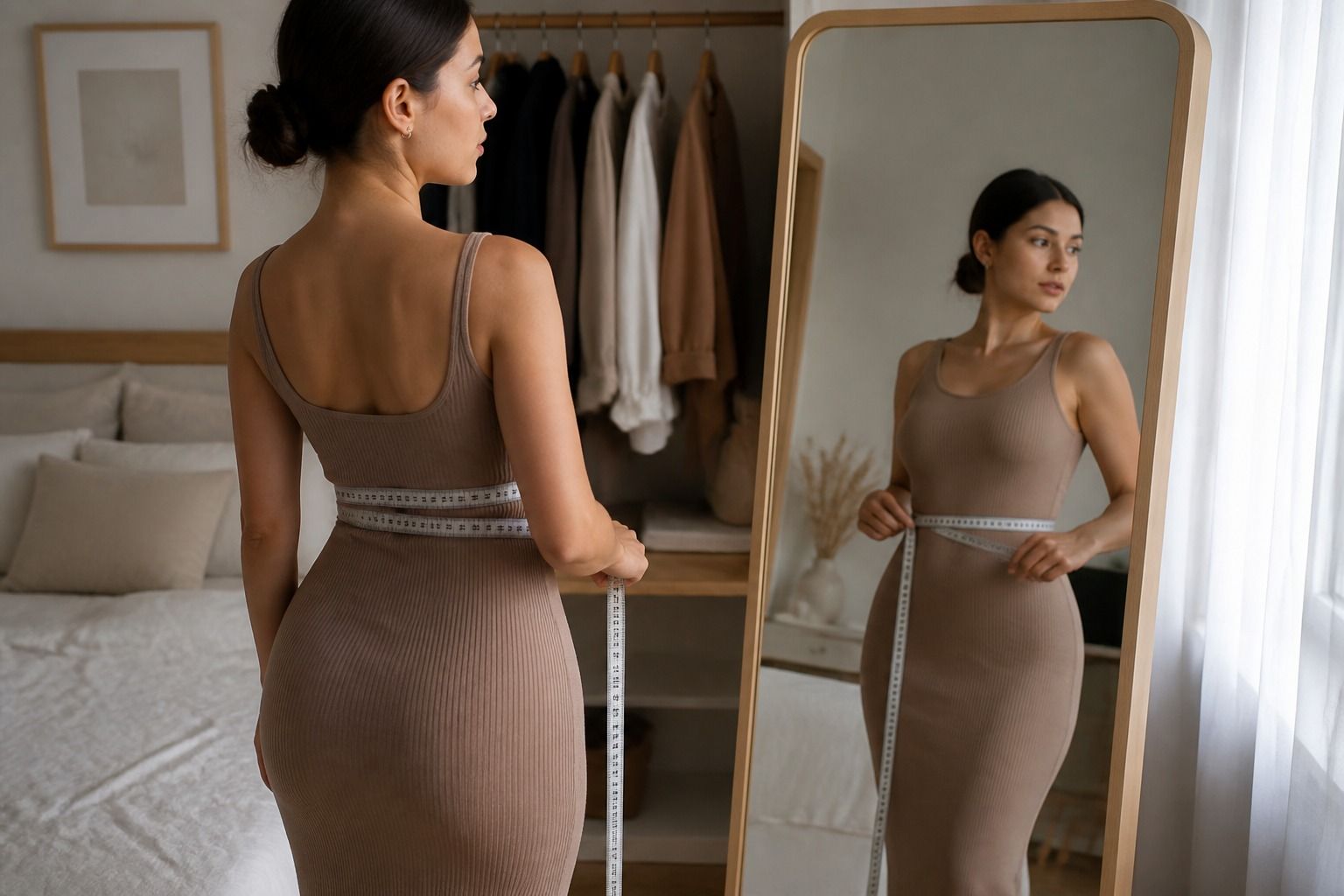
Choose a time when you are not rushing to leave. Wear light, close-fitting clothes or measure over underwear, stand normally, and use a flexible tape. Record bust at its fullest point, waist at the natural bend of your torso, and hips at their fullest point with your feet together. For shoulder width, measure from one outer shoulder point to the other across the back; a friend can make this reading less awkward.
Take every measurement twice. The tape should touch your body without digging in, and it should stay parallel to the floor for bust and hips. Do not alter your stance to make a number look tidier. A body shape test is comparing proportions, so an honest, repeatable number is far more useful than a perfectly round one.
| Step | What to notice | Why it matters |
|---|---|---|
| Measure bust | Fullest point and level tape | Shows how the upper torso relates to hips |
| Measure waist | Natural bend, relaxed breathing | Helps identify where definition appears in clothing |
| Measure hips | Fullest seat and upper-hip point | Explains many trouser and skirt fit issues |
| Check shoulders | Width and slope, not only a number | Shapes how necklines and jackets sit |
Use the mirror for information, not judgement
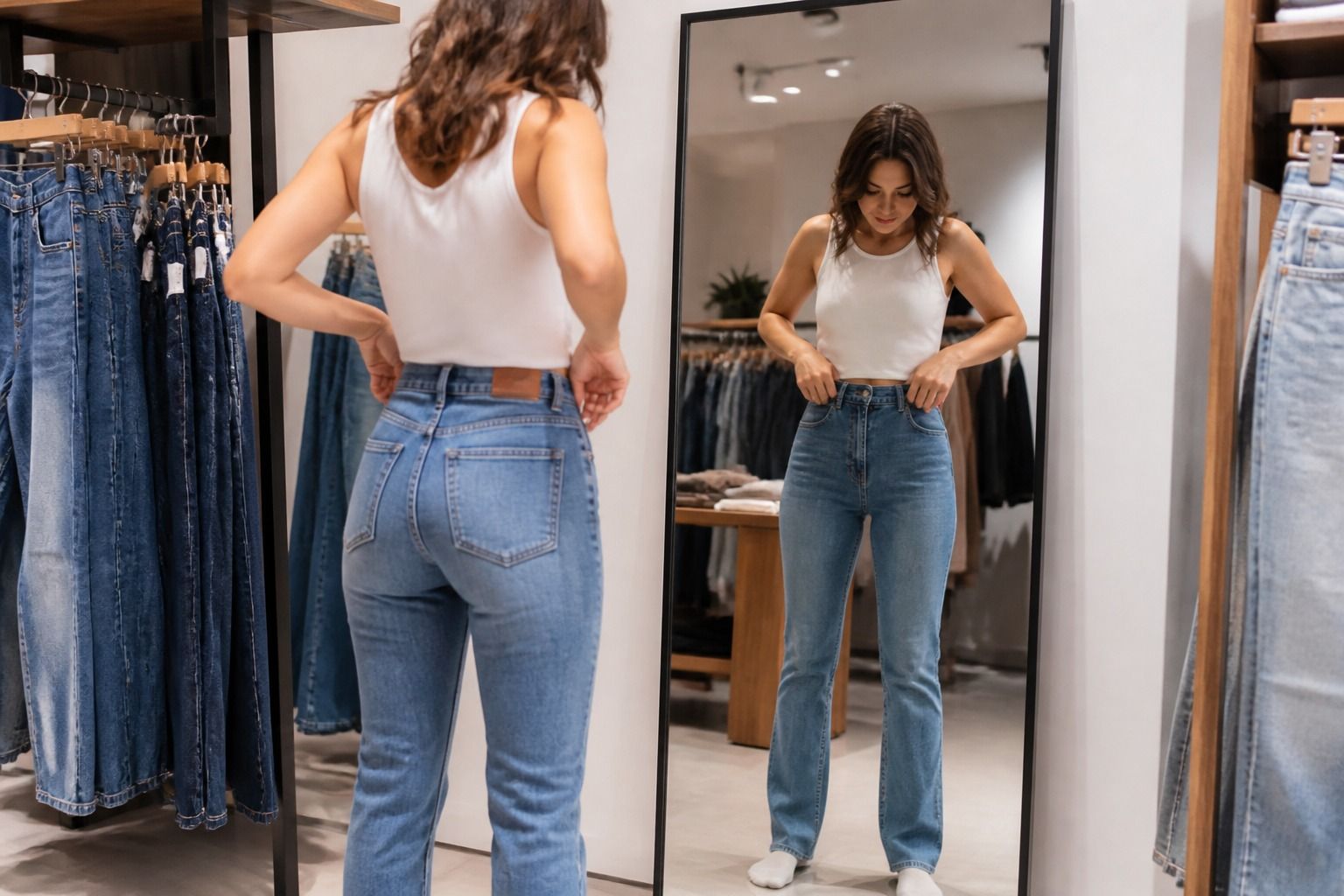
Measurements are one half of the picture. In a mirror, look first at the outer line made by simple fitted clothing: where does the shoulder line appear widest, where does the torso narrow, and where do the hips create their fullest line? A front-facing photograph taken at about chest height can help if mirrors make you over-focus on details. Keep the lighting plain and avoid a dramatic pose.
Look at posture with curiosity. One shoulder may sit lower, a ribcage may rotate slightly, or a preferred standing stance may shift a hip. None of this needs correcting. It simply helps explain why a symmetrical garment can hang asymmetrically. The mirror check is most useful when it produces a concrete observation, such as “a crew neck feels high on me” or “a cropped layer ends at my narrowest point.”
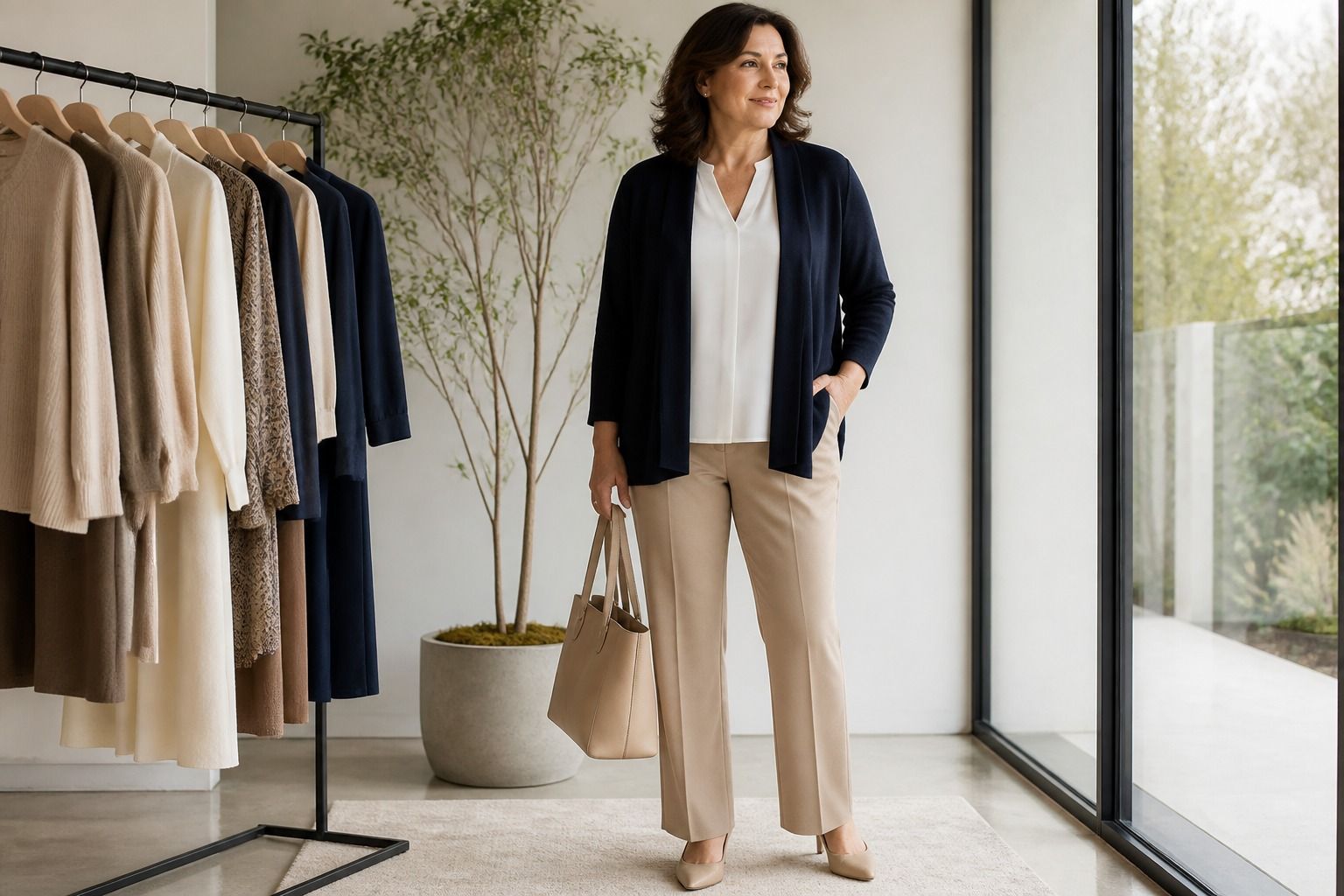
Try the same mirror check in two outfits with different amounts of structure. A relaxed T-shirt may show the body’s outline one way, while a buttoned shirt or a blazer may shift the shoulder line and waist emphasis. This is not evidence that one version is better. It is a reminder that body shape and garment shape meet each other; the clothing is part of what you are seeing.
Compare shape families without forcing a match
Broadly, a pear or triangle shape often has hips that read fuller or wider than the upper body; an inverted triangle reads stronger through shoulders or bust; a rectangle has relatively close bust, waist, and hip measurements; an hourglass has a visibly defined waist between a more balanced bust and hip line. Apple is often used for a fuller central torso, but the term is used inconsistently, so the individual fit notes matter more than the word.
Instead of asking which outline you match perfectly, ask which two descriptions explain your clothes. You might have the shoulder line often associated with an inverted triangle and the waist definition commonly associated with an hourglass. That combination is not a problem to solve. It is a better clue for choosing sleeve volume, jacket length, waistband placement, and ease through the bust.
Let garment fit confirm the pattern
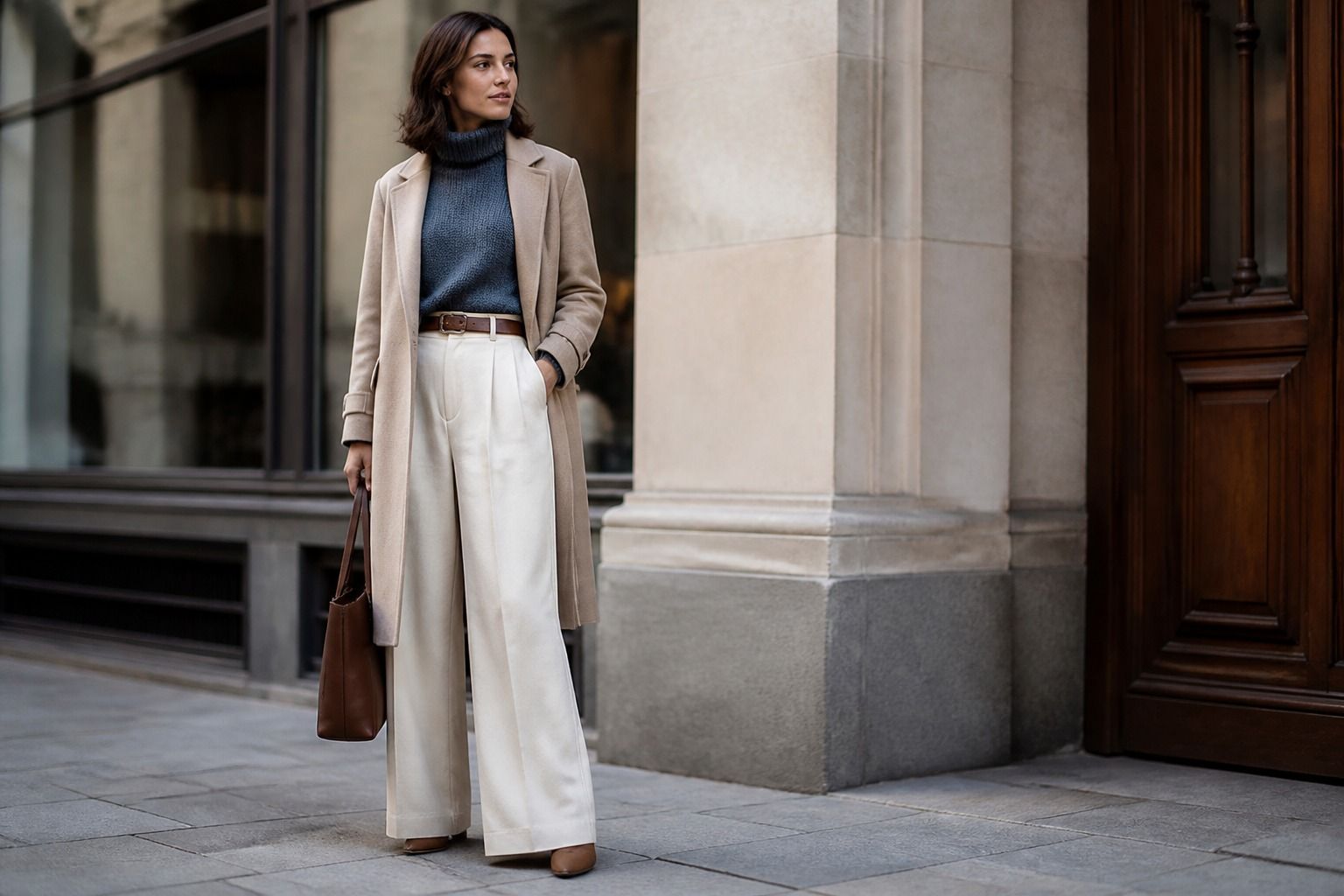
Your best fitting clothes are a small archive of data. Pull out a pair of trousers that stays comfortable through a full day, a top that you reach for repeatedly, and one garment that never quite works. Check where seams and hems land. Does a high-rise waist feel secure or restrictive? Does a fitted shoulder improve the line, or does it limit movement? Does a skirt need room at the hip while the waistband sits loose?
Write down the pattern, not a verdict. “Needs a curved waistband” and “prefers soft drape over the bust” will help when shopping. So will “likes a straight leg with a defined waist” or “avoids sleeve seams that cut across the shoulder point.” These details tell you more about how to dress than a single body shape label ever can.
It can help to separate a fit observation from a style preference. A shirt that pulls at the bust is a fit clue; preferring the visual quiet of that same shirt worn loose is a preference. Keep both notes. The first tells you where a garment needs more room, while the second helps you recognize the shapes you will reach for. Together they are more reliable than trying to make every outfit prove one body-shape label. They also make it easier to leave a garment behind when the construction is wrong, even if the label sounds like it should suit you.
Keep the result useful as you change
Body proportions can look different with a new haircut, a different bra, a change in activity, or simply a new style preference. Clothing sizes also vary wildly between brands, which is why a number on a label is poor evidence of body shape. You do not need to repeat the process every week. Revisit it when you are rebuilding a wardrobe, buying tailored pieces, or noticing a consistent fit issue.
Keep a body-neutral approach: the purpose is to give yourself more options and fewer frustrating try-ons. Use the result to test a silhouette, then trust your own comfort and eye. The most accurate answer to how to find your body shape is often a short collection of observations that gets more useful with wear.