An inverted triangle body shape is a description of proportion: the shoulders or upper torso tend to read wider than the hips. It is not a warning label, and it does not mean you need to make your shoulders disappear. The practical question is simpler: which cuts give you room to move at the top, and where do you want an outfit to carry its visual weight? Once those choices are clear, getting dressed becomes pleasantly less strategic.
What an inverted triangle shape actually describes
People use the phrase v shape body type for many different builds. Some have broad shoulders from bone structure, some from a full bust, and some simply notice that fitted jackets look stronger above the waist than below it. Shoulder width alone is not enough to explain how clothes will fit. Sleeve shape, armhole depth, torso length and the rise of a trouser all matter in the final outfit.
Find ease through the shoulders first
A good shoulder fit is the foundation. The seam should sit near the shoulder edge without digging in, and the armhole should let you lift an arm without pulling the entire top across your back. This is particularly important in blazers, denim jackets and shirts, where a too-small shoulder can make a polished outfit feel stiff within an hour.
Look for soft shoulders, raglan sleeves, dropped seams or sleeves with a little volume below the shoulder rather than right at its outer edge. That does not make a strong shoulder line less attractive; it simply changes how the fabric moves. A relaxed linen shirt, a draped knit or a single-breasted jacket with a clean lapel can feel easier than a heavily padded piece if you dislike the added structure.
Add lower-body weight when you want a different balance
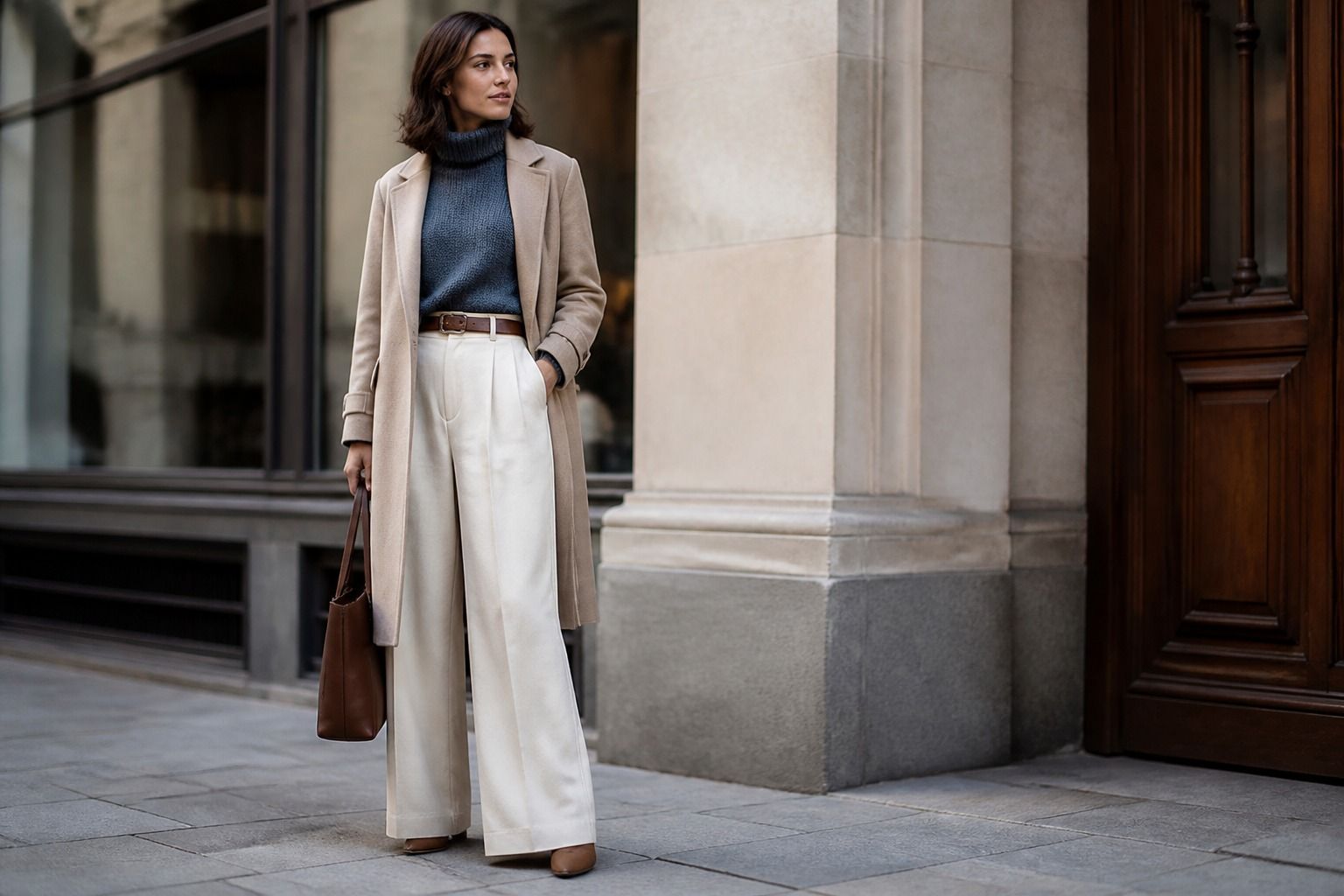
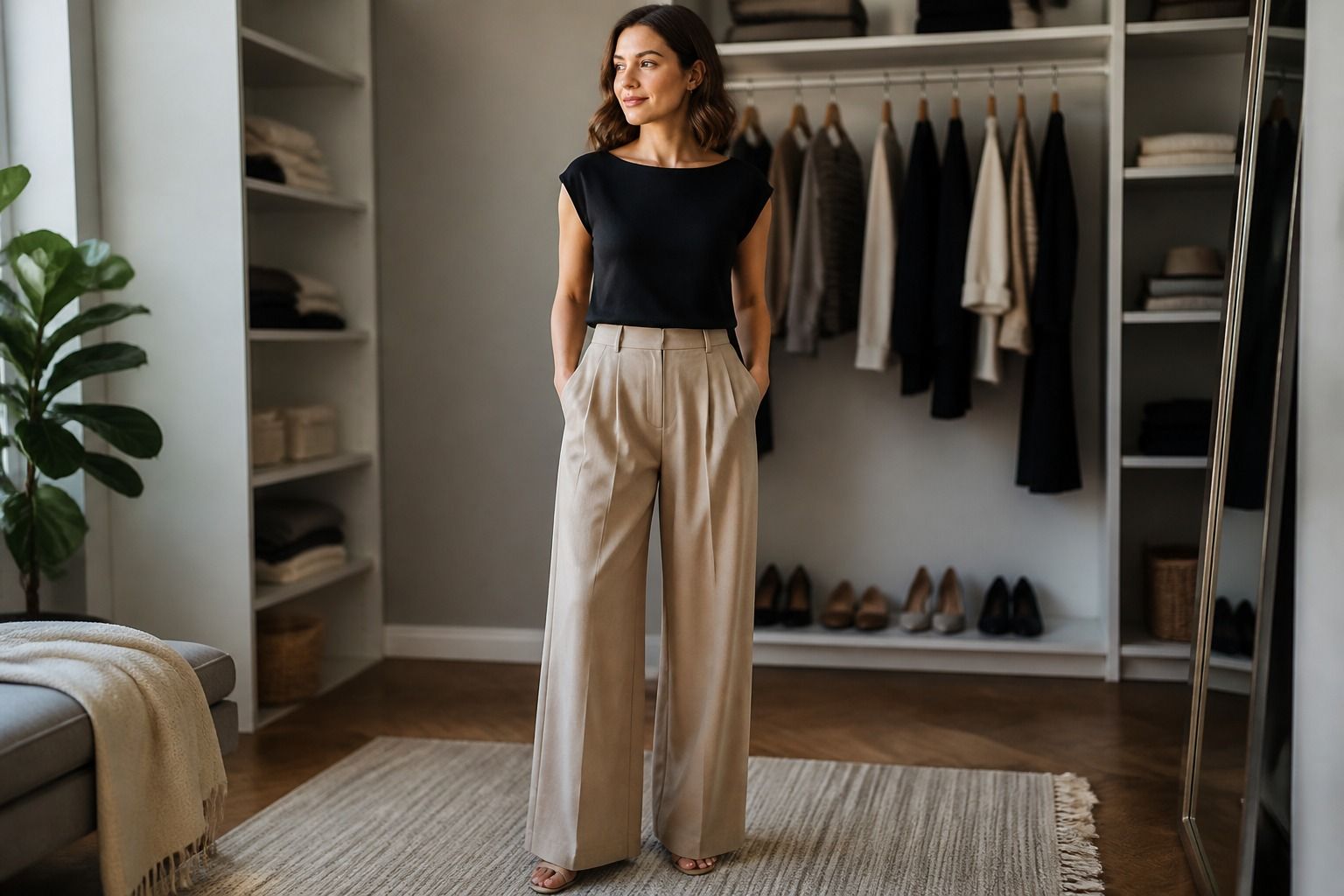
Wide-leg trousers, pleated trousers, cargo pockets, a-line skirts and textured midi skirts can bring visual interest below the waist. Think of this as distributing attention, not correcting a body. A pair of wide-leg trousers works best when the waistband is comfortable and the hem has the right relationship to your shoes; too long, and the volume becomes something you have to manage rather than enjoy.
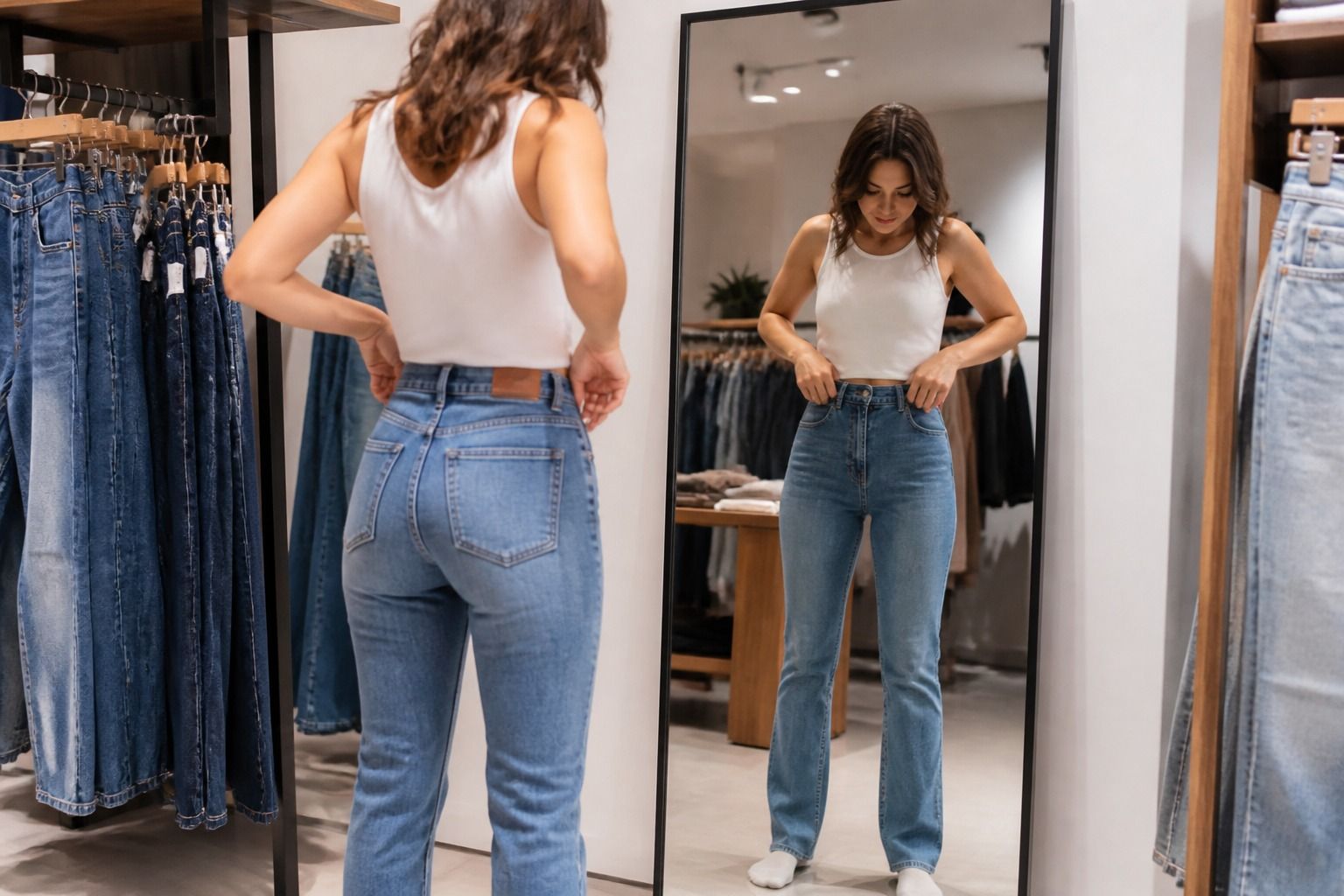
Start with modest changes if full volume feels unfamiliar. A straight trouser with a pronounced crease, a skirt with a gentle flare, or jeans with a slightly wider leg opening may be enough. Colour can do the same job: a quieter top with trousers in olive, rust, cream or a subtle check shifts the centre of the outfit without relying on one dramatic silhouette.
Necklines and sleeves in everyday practice
Necklines change the top half of an outfit quickly. A V-neck, scoop, open collar or wrap front can create a vertical opening near the face, while a boat neck or square neck can deliberately echo the shoulder line. There is no universal best choice. Try each with the same trousers and see which makes you feel like yourself. The useful neckline is the one that lies flat and does not need to be tugged into place.
With sleeves, watch the placement of details. A puff sleeve that starts at the shoulder can make a bold, fashion-forward shape; a gathered cuff or a softly ballooned forearm moves that interest lower down. Cap sleeves may feel restrictive if the armhole is tight, so do the reach test before buying. A small fit issue at the shoulder tends to become a large annoyance by the end of the day.
Choose layers that do not compete with you
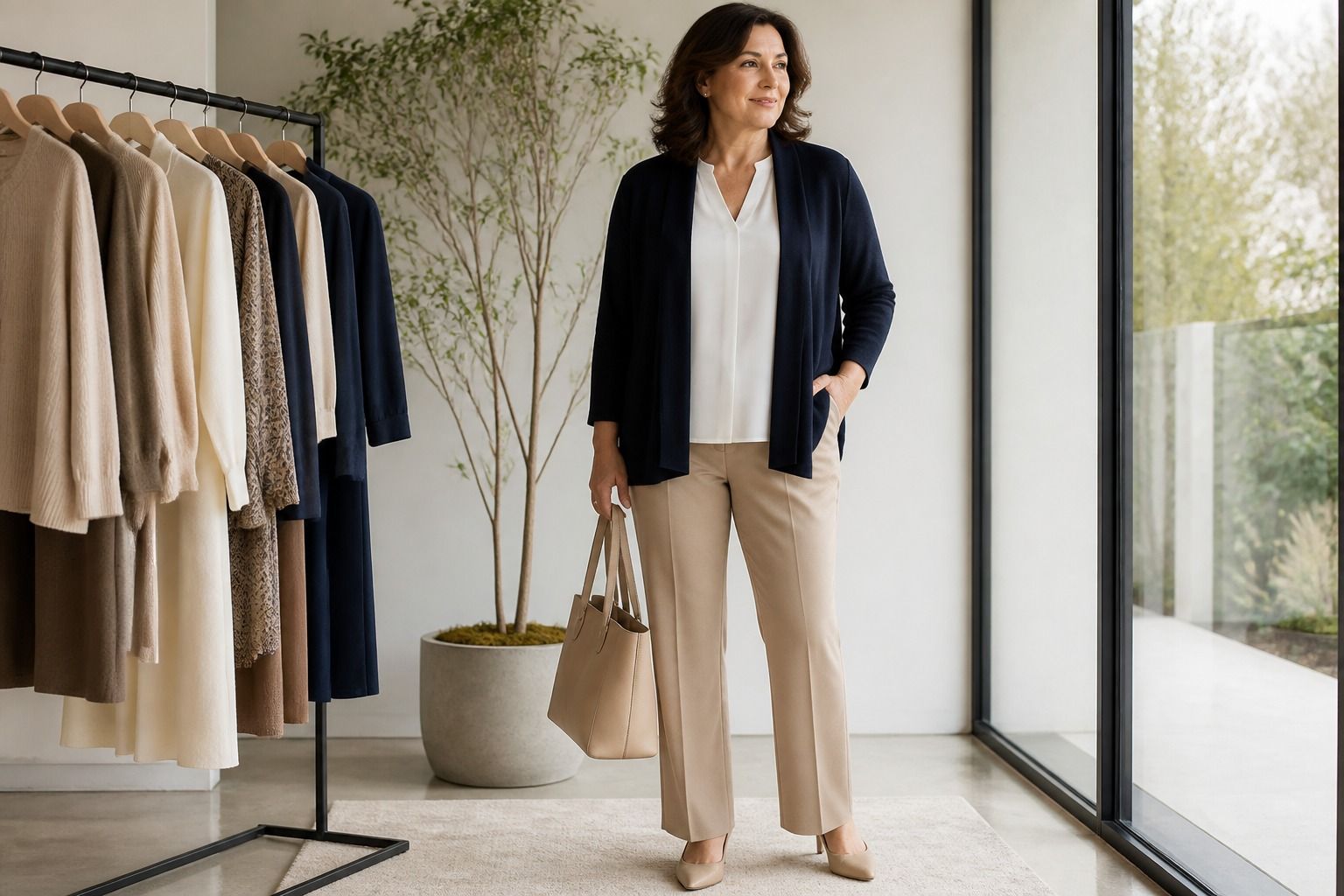
Outerwear is where inverted triangle styling advice often becomes needlessly restrictive. You do not have to avoid blazers or structured coats. Instead, decide what you want the layer to do. A straight coat worn open creates a long vertical line. A cropped jacket can make high-rise wide-leg trousers feel deliberate. A cardigan with a soft front edge can take the sharpness out of a tailored trouser without becoming shapeless.
Check the layer from the side and back, not just the front mirror. Does the collar sit close to the neck? Does the jacket bunch behind the arms? Does its hem end in a place that clashes with the waistband or skirt volume? These details are more meaningful than a generic ban on shoulder pads. If an exaggerated shoulder makes you feel powerful, wear it; pair it with a simple lower half and let the contrast be the point.
Finish an outfit with deliberate anchors
Shoes and bags can quietly change proportion. A substantial loafer, ankle boot or sneaker gives a wider trouser or midi skirt a convincing foundation. A very delicate shoe can create a light effect that you may love, but it may also make a heavy trouser look unfinished. Test the same outfit with two shoe weights before deciding the clothes are wrong.
For how to dress an inverted triangle, keep a small mental toolkit rather than a list of rules: shoulder ease, a neckline you enjoy, one lower-body choice with enough presence, and a layer that moves well. That toolkit works for office clothes, denim weekends and occasions alike. It also leaves room for a sharp shoulder whenever that is exactly the mood you want.\n
Do not be surprised if your favourite balance changes with the season. In summer, bare arms and a fluid trouser may feel enough; in winter, a coat, boot and knit introduce their own scale. Recheck the full outfit under normal lighting and from a few steps away. The best proportion is often the one that feels easy before you start analysing it.
Keep the test simple: wear it for ten quiet minutes at home, move normally, and notice whether you forget about the garment or keep negotiating with it. That answer is useful data, not a failure of taste.
For occasion dressing, begin with the garment you want to wear rather than a balancing exercise. A sleeveless jumpsuit might need a soft wrap for the evening; a strong-shouldered blazer may be perfect with a fluid skirt and a substantial boot. Check the outfit while moving through a doorway and sitting down, because a stiff sleeve or a slipping strap quickly changes the experience. Good proportions should support the plan for the day, not make you monitor them from every angle.