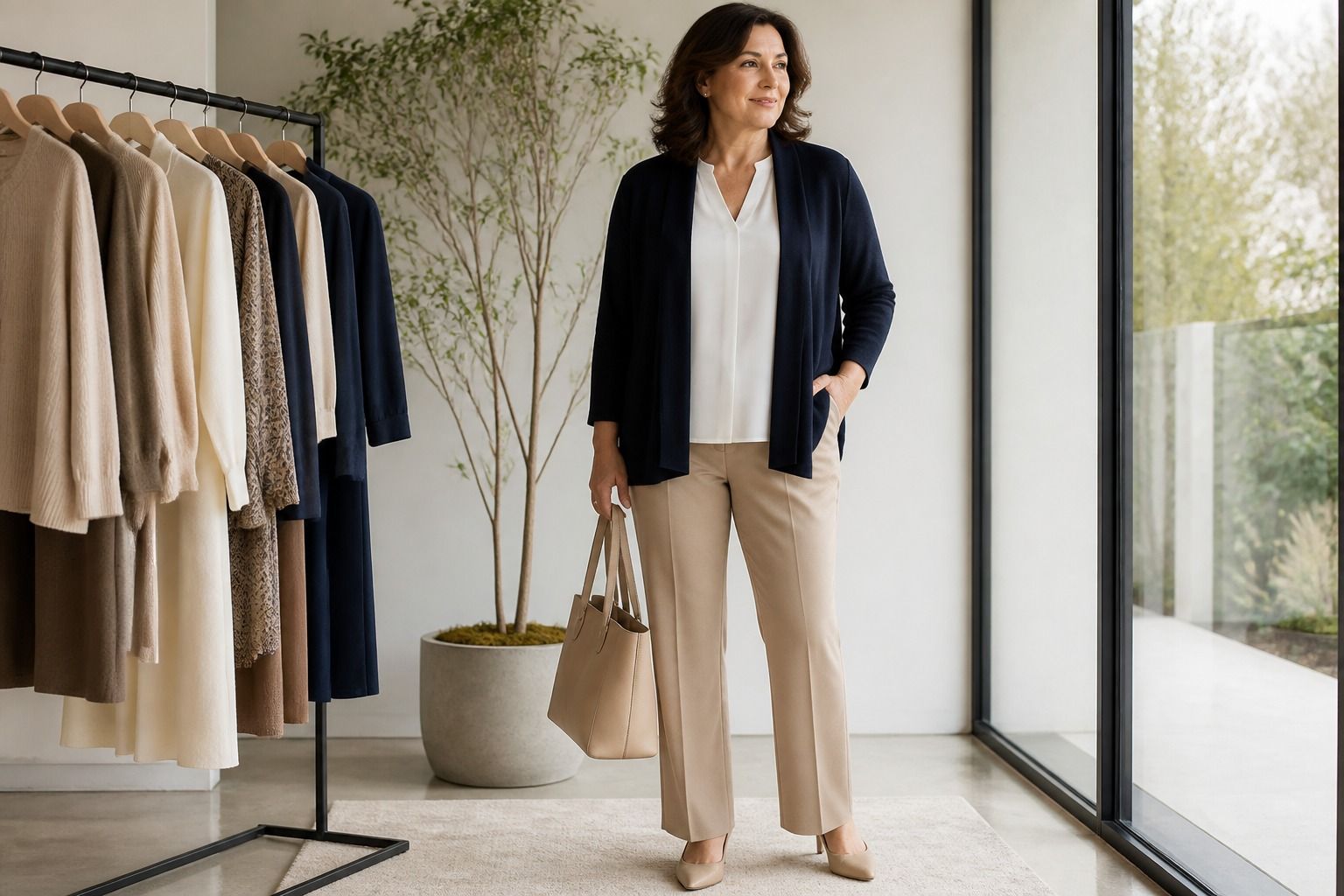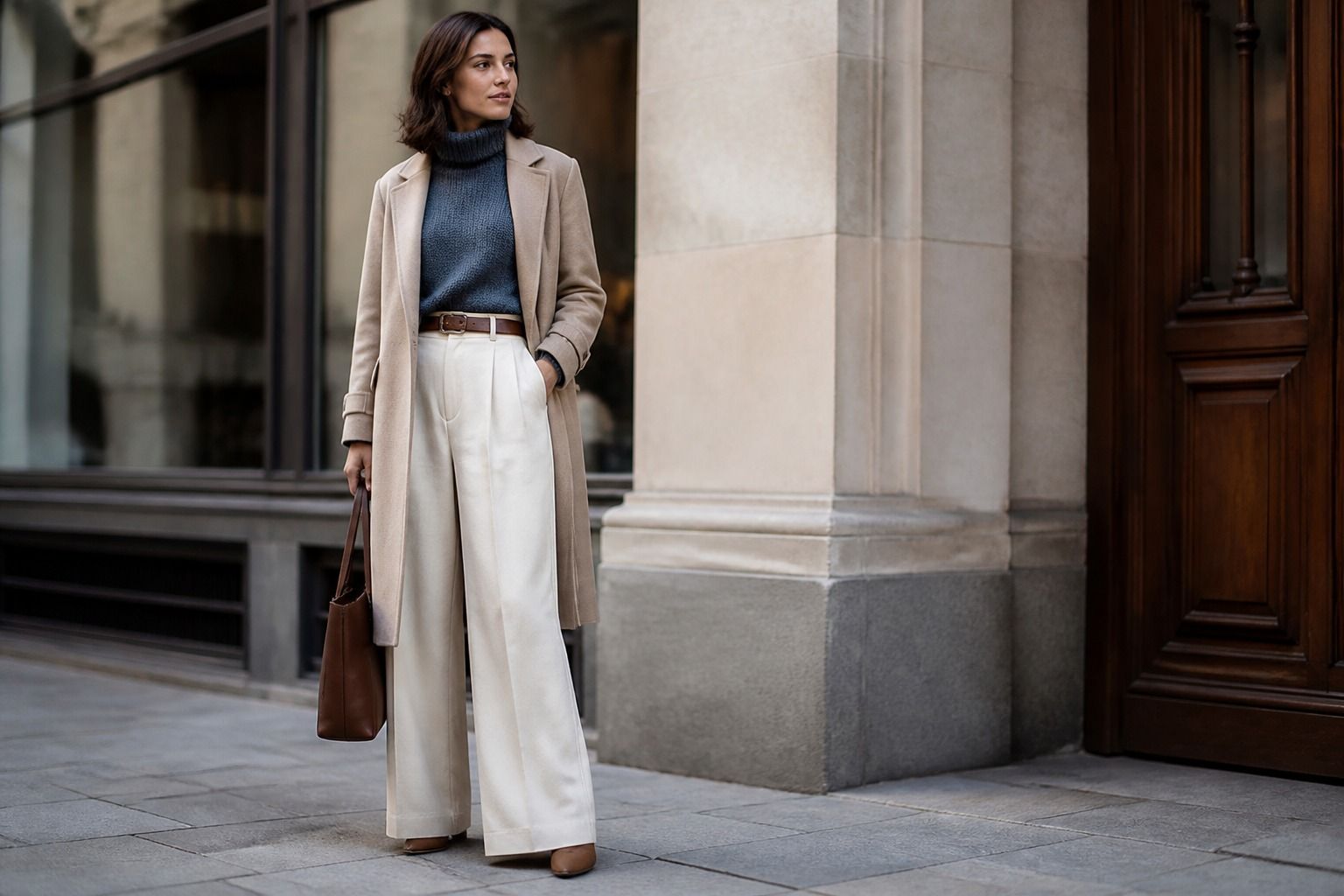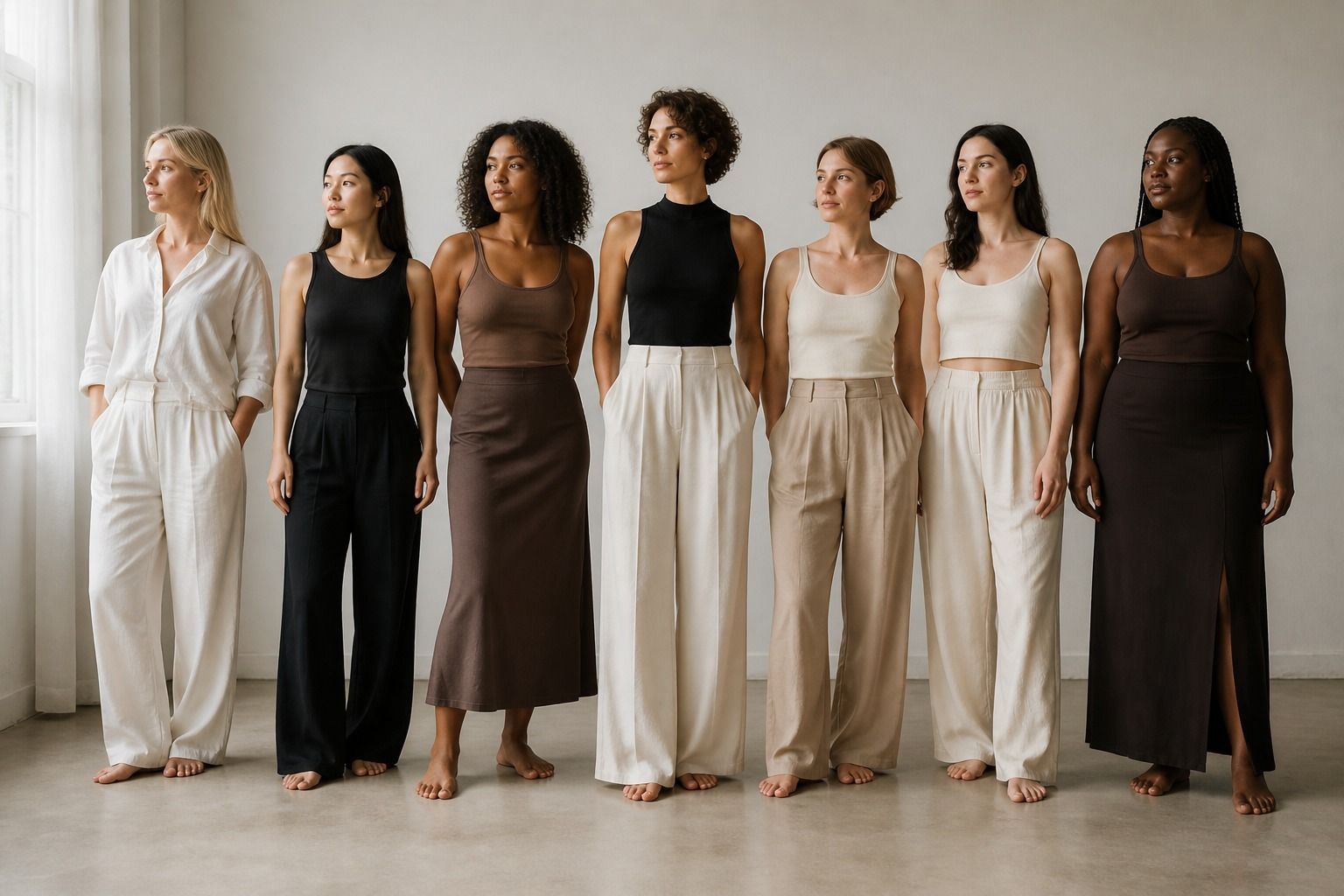
Kibbe body types are often introduced as a quiz with a dramatic reveal at the end. In real life, the useful part is slower: noticing why one jacket feels settled while another feels like it is arguing with you. The system can give names to those observations, but it works best as a way to test clothes, not as a label you have to defend.
Start with the question the system is actually asking
Kibbe is built around the relationship between yin and yang: softness and roundness on one side, length, sharpness, and angularity on the other. That does not mean a person is neatly one thing or the other. It means an outfit has a particular visual logic, and it may either echo or interrupt the lines you naturally bring to it.
Why a Kibbe test or body type quiz can send you in circles
A typical Kibbe test asks about shoulders, hands, facial features, and perceived height. Those questions can be interesting prompts, but they turn slippery fast. Camera angle changes a shoulder line; a close selfie exaggerates features; and most people answer from years of hearing what they are supposed to see. Two friends can describe the same feature in completely different language.
There is also a practical problem: a multiple-choice result cannot see scale and proportion in motion. A blazer may look excellent in a still photo, then bunch at the elbows, pull across the back, or disappear under a large tote bag during an ordinary day. Treat a kibbe body type quiz as a notebook exercise, not a machine that delivers certainty. Keep the observations that repeat, and discard the rest.
| Less useful shortcut | More useful check |
|---|---|
| “My shoulders decide my type.” | Compare several necklines and jacket constructions in full-length photos. |
| “I must look like a celebrity example.” | Notice whether your own outfit has a clear, comfortable line. |
| “One answer rules out everything else.” | Look for patterns across fabric, scale, shape, and movement. |
| “The label tells me what to buy.” | Use the label to generate a small, testable shopping list. |
The five Kibbe families in plain language
The familiar family names are best understood as broad starting directions. Dramatic often points toward a long, clean, sharper impression: think an uninterrupted column, a defined shoulder, or a long trouser break. Natural suggests width, ease, and a more relaxed physical presence; textured knits, room through the body, and open necklines may feel more at home there.
Classic is about balance and moderation rather than a perfectly average body. Clothing with even proportions, controlled detail, and neither tiny nor oversized scale can look especially calm. Gamine combines contrast and compact animation: a broken line, a cropped length, or a mix of crisp and rounded elements can be more convincing than one continuous sweep. Romantic leans toward roundedness, softness, and close but not restrictive shaping. None of these descriptions is a uniform, and the real system includes more specific identities within the families.
Observe your line before you shop for a new wardrobe
Set up a simple comparison at home. Wear plain fitted clothes you can move in, stand several steps from the camera, and take front, side, and walking photos. Then repeat in three outfits you already own: one structured, one relaxed, and one with obvious waist emphasis. Keep the lighting and shoes roughly consistent. You are not looking for flaws; you are looking for the overall line your eye returns to.
Ask concrete questions. Does the eye travel smoothly from shoulder to hem, or does it stop at every contrast? Does a stiff fabric hold its own against you, or does it look borrowed? Is a high waist an intentional proportion choice or merely where the garment happens to sit? Make notes after wearing the clothes for two hours, not only during a mirror session. A silhouette that photographs beautifully but feels fussy by lunch deserves a lower ranking.
Accommodation is more practical than category hunting
In current Kibbe conversations, accommodation is often the most helpful word. Instead of asking, “Am I allowed to wear this?” ask what the garment must accommodate: a sense of vertical line, width, curve, balance, or a compact contrast. This reframes a rule into a fitting problem. A person who benefits from vertical may still wear a short jacket; it may simply work better with a continuous trouser colour or a longer underlayer.
Fabric matters here. A rigid poplin shirt, a drapey jersey top, and a medium-weight wool overshirt can share nearly the same cut yet create completely different results. Try one variable at a time. If you love a wide-leg trouser but it feels overwhelming, test a firmer fabric, a cleaner hem, or a closer-fitting top before declaring the silhouette wrong.
Use the system alongside your taste, colour, and real schedule
Kibbe cannot choose your favourite shade, your workplace dress code, or whether you cycle to the train. Personal colouring may tell you which blue makes your face look lively; your style essence may explain why ornate jewellery feels theatrical or delightful. These are separate lenses. They can cooperate without being forced into one grand answer.
A useful result is a short set of preferences you can act on: “I prefer medium-scale details, jackets with room through the back, and dresses with an evident vertical line.” Take that list into a fitting room and revise it when evidence changes. The system has done its job if getting dressed becomes clearer. It has gone too far if it makes a comfortable, loved outfit feel forbidden.
One final practice keeps the system grounded: make a comparison rail in your wardrobe rather than a fantasy shopping cart. Hang two jackets, two trouser shapes, and two dresses that you already own. Wear them with the same shoes over a few weeks and record which combinations receive no second thoughts once you leave home. That is useful evidence about line, scale, and ease. It also shows where the language is too blunt. You may like a relaxed shoulder but dislike oversized pockets, or enjoy a long line only when the fabric has some weight. Those distinctions are personal, and they are exactly what a broad family name cannot supply. Keep the details that help you choose; let the label stay in the background.