A Kibbe test at home is most useful when it produces better outfit experiments, not a final verdict. You need ordinary clothes, a phone camera, and a willingness to change your mind. The aim is to notice a pattern in line and proportion over several wears, rather than to force yourself into the first result that appears online.
Set up observations, not a courtroom case
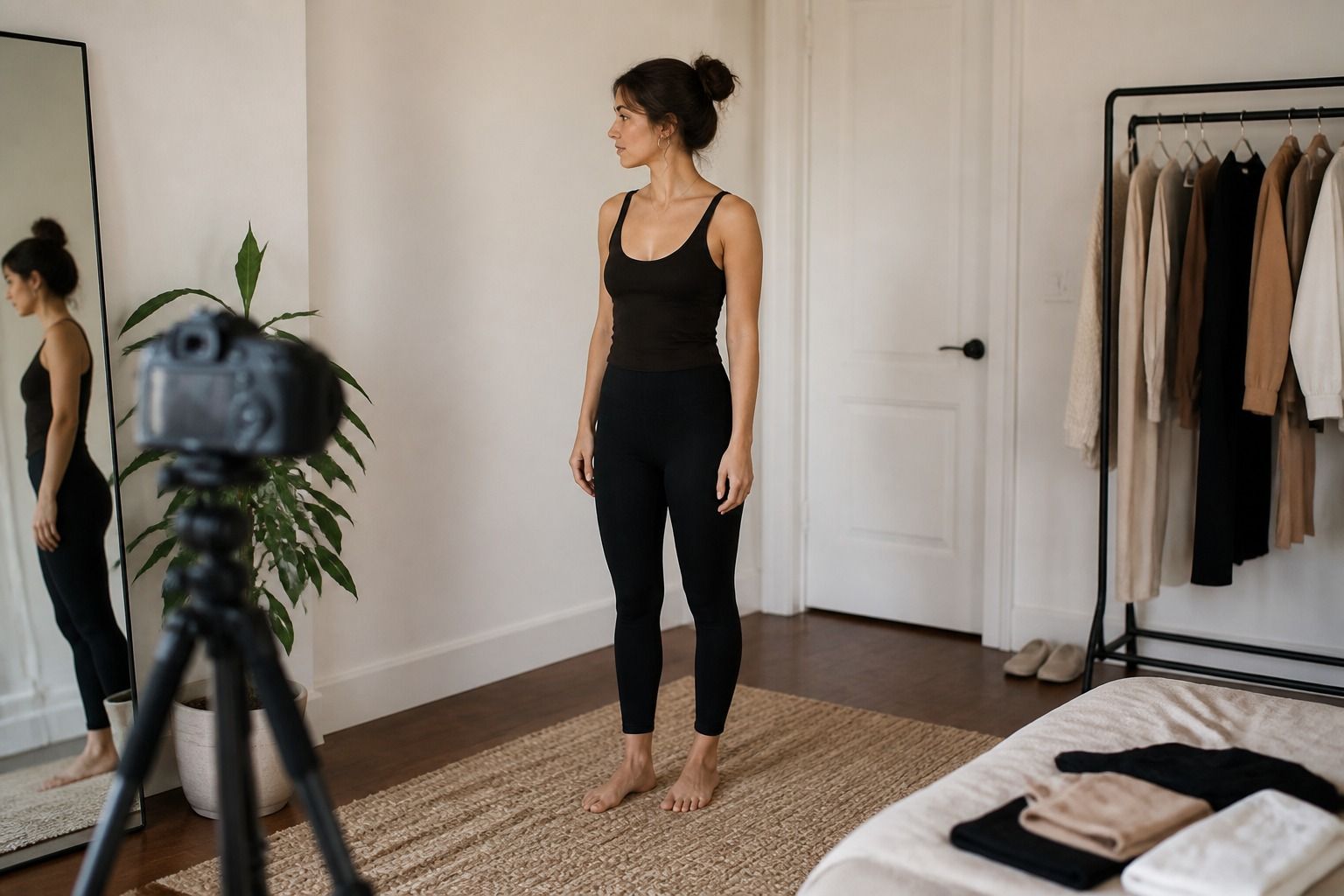
Pick a morning when you are not rushing out the door. Wear simple neutral clothes that show the outline of your body without squeezing it: a plain top and straight trousers, or a close but comfortable dress. Stand on a level floor a few steps from the camera. A timer and the rear camera are usually more reliable than a mirror selfie held at chest height.
Use mirrors and photos for different jobs
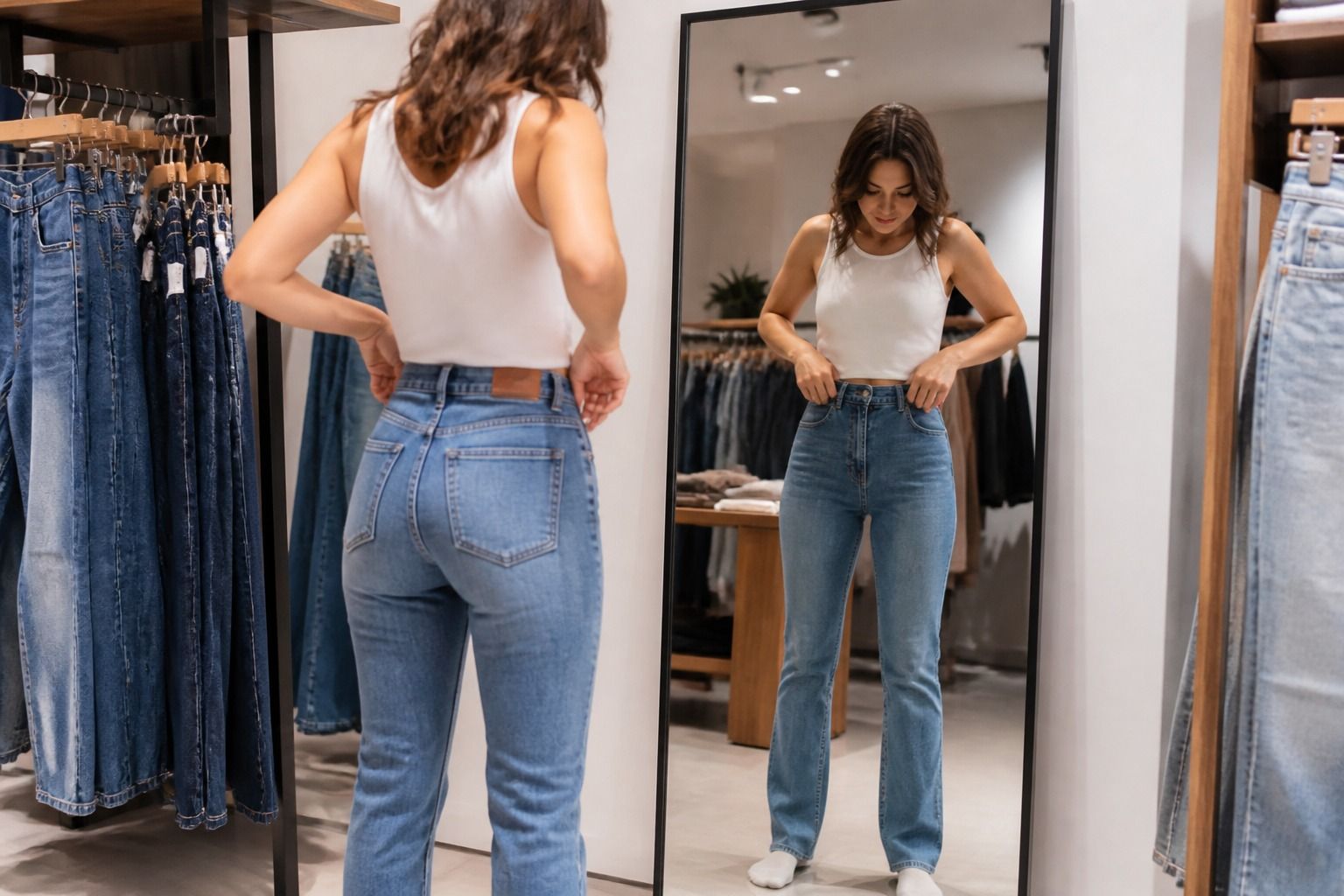
A mirror is good for movement. Raise your arms, sit down, turn sideways, and notice where a garment shifts. Full-length photos are better for seeing the whole arrangement at once. Take front, side, and back views in the same spot, with the camera around waist height. A wide-angle lens held too close can turn a calm silhouette into a strangely stretched one.
Do not make a decision from one image. Compare a small set taken over two or three days, ideally with the same shoes. In one look, test a defined shoulder; in another, a softer shoulder seam. Try a long open layer and then a cropped layer. The contrast teaches more than staring at a list of physical traits, especially when posture and lens distortion are in the mix.
| Set-up choice | Why it helps |
|---|---|
| Rear camera on a timer | Reduces close-up distortion and frees your posture. |
| Plain, familiar clothes | Keeps a loud print or costume detail from deciding the result. |
| Three outfit comparisons | Shows a pattern instead of one flattering accident. |
| Notes after a full wear | Catches fit and movement problems a still image misses. |
Ask questions that reveal line
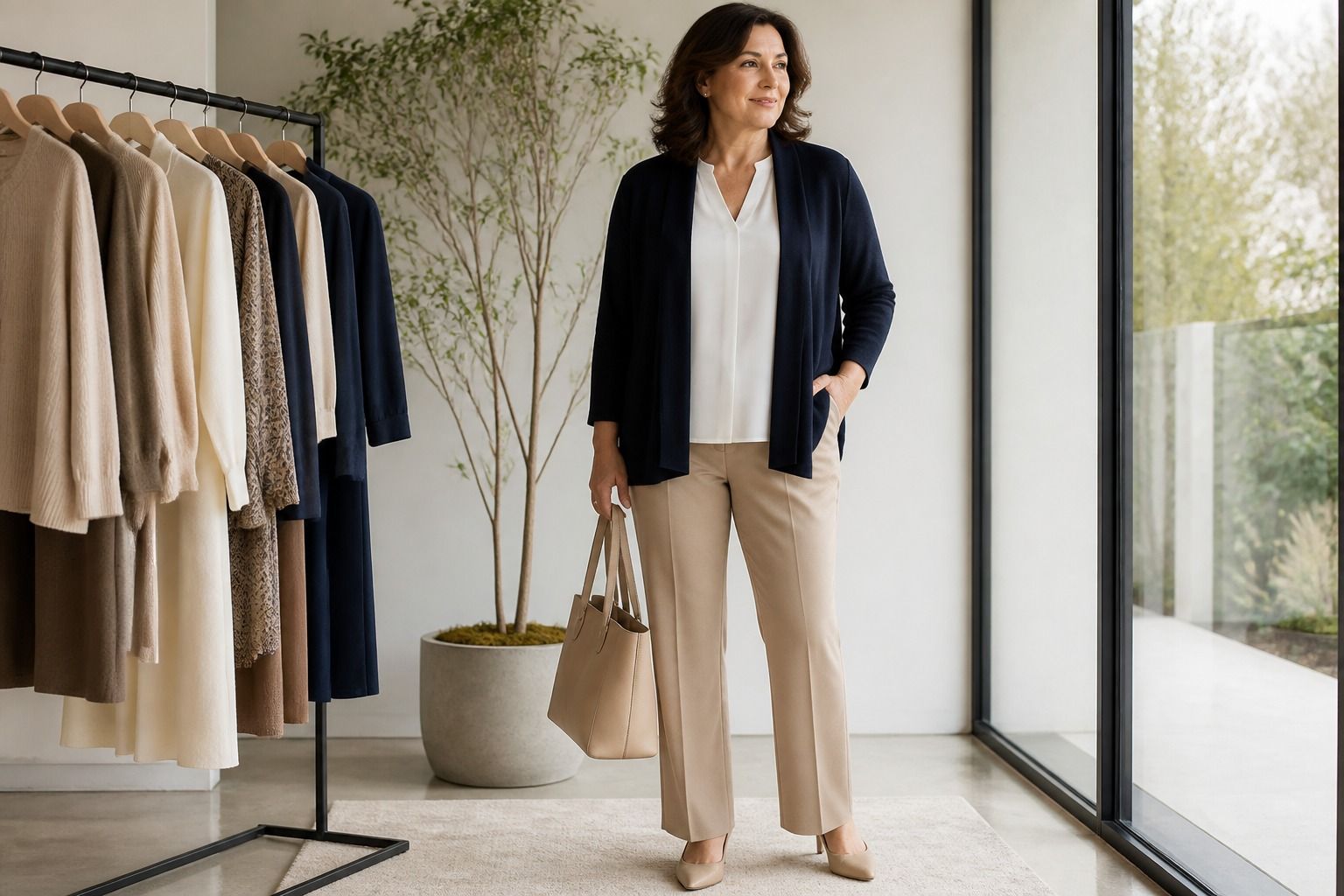
Rather than asking whether one feature is “soft” or “sharp,” ask how the clothing behaves around it. Does a straight, uninterrupted line look settled from shoulder to hem? Do broad, easy shapes feel intentional or merely loose? Does a very small collar look charming, busy, or lost? Does a clearly shaped waist give the outfit focus, or does it chop the whole picture into pieces?
Scale is another quiet clue. A tiny floral print, a large checked coat, delicate hoops, and a thick leather belt can all be worn by anyone, but their visual weight changes the composition. Make a short grid in your fit diary: garment, fabric, scale, first impression, and how it felt after an hour. You are looking for repeated preferences, not evidence that excludes every other possibility.
Turn a Kibbe body type test into clothing experiments
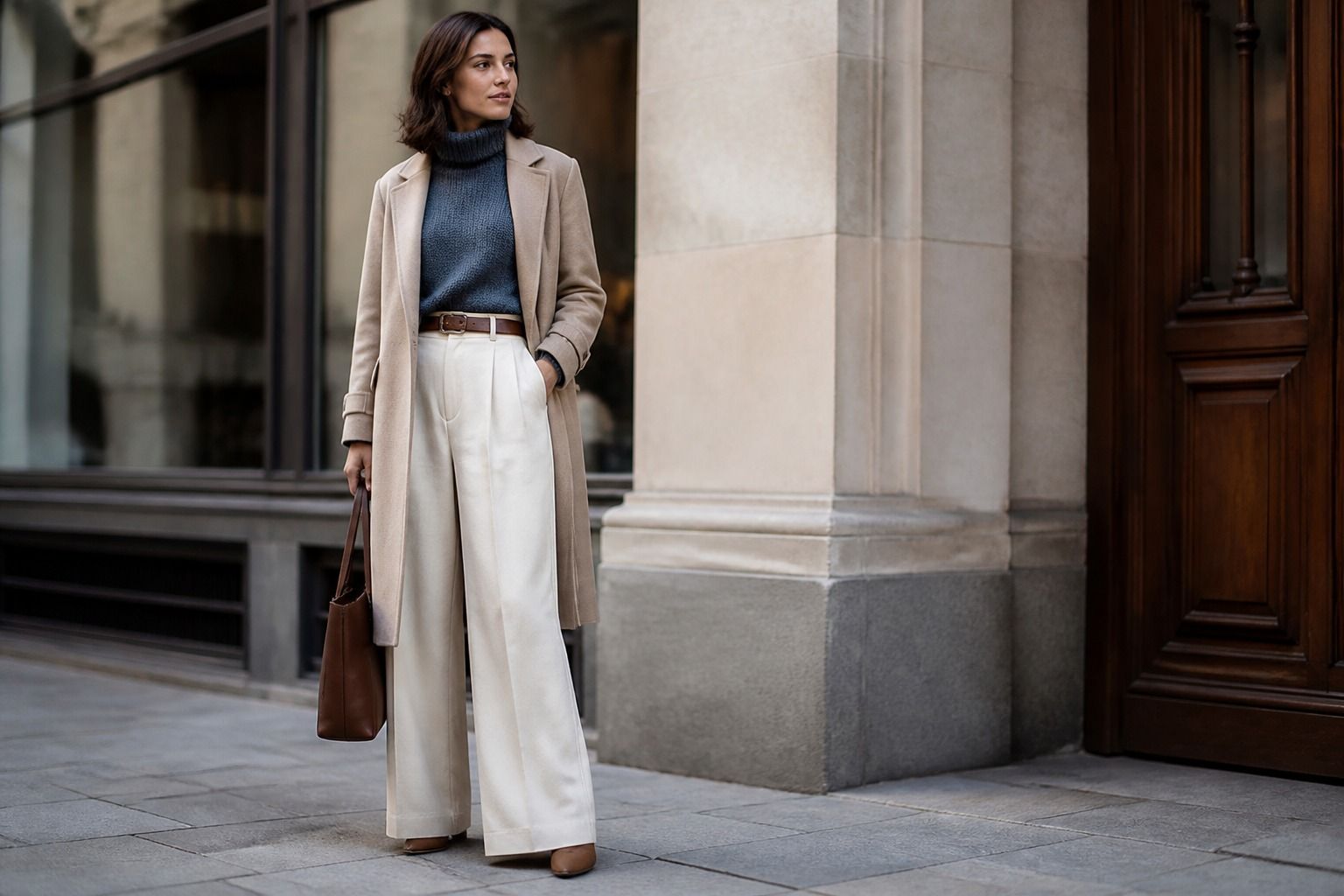
Once two or three possible directions emerge, borrow the recommendations as hypotheses. If you suspect a need for vertical, compare a similar-colour top and trouser with a high-contrast version. If width seems relevant, try a relaxed overshirt in a substantial fabric next to a narrow structured blazer. If curve may need accommodation, compare a garment with enough room through the bust and hip to one that lies flat only when you stand still.
Change one factor per test. Swapping shoes, hair, handbag, and hem length all at once makes the result impossible to read. Repeat a promising outfit on an unremarkable day: commute in it, sit at a desk, carry groceries, meet a friend. The combination that survives ordinary life is more valuable than one designed only for a photo.
Let fit be the first filter
Even a strong silhouette idea cannot rescue a poor fit. Check shoulder seams, armhole mobility, trouser rise, waistband pressure, and whether a hem catches at an awkward point when you walk. Alterations can change a garment’s whole rhythm: shortening a sleeve, moving a button, or taking in a waist may make an almost-right piece genuinely useful.
This is where online kibbe test advice can become unrealistic. It is tempting to bin every item that does not match a family description. Instead, make three piles: works already, worth adjusting, and not worth more effort. The middle pile is often where you learn the most about your personal proportion and the fabrics you actually enjoy wearing.
Know when to pause, revise, or leave the label open
It is normal for a result to remain fuzzy. Weight changes, a different haircut, a new understanding of scale, and simply seeing better photos can shift your interpretation. A Kibbe image identity is not medical information and it is not a permanent instruction sheet. You can say, “These lines are useful to me right now,” without claiming a finished type.
Pause if the process makes getting dressed more anxious or turns every mirror into an examination. Return to a few outfits that feel like you, then extract practical language from them: crisp, relaxed, elongated, compact, draped, tailored, playful. That vocabulary can guide a shopping decision today, even if the larger question of how to find your Kibbe type stays open.
Give the process a realistic time limit. Four or five well-documented outfits over a fortnight are enough for a first pass; adding fifty screenshots usually creates noise. If you are torn between two directions, keep both on the page and test one recommendation from each. The better option is the one that makes a familiar outfit easier to build, not the one with the most persuasive description. You are allowed to use the test lightly, borrow only its useful language, and stop when your wardrobe questions have been answered.
Let the answer stay provisional. Good clothes give you more information than a perfect label ever could.
It helps to separate a result from a shopping mood. A new coat can feel exciting because it is new, while a well-fitting old cardigan can feel invisible because you know it too well. Test both in the same way: photograph them, move in them, and wear them outside at least once. Ask whether the garment makes the rest of the outfit easier to arrange, whether you stop adjusting it, and whether you would reach for it on an ordinary morning. These small checks protect the test from novelty and from the pressure to find a dramatic transformation. The most convincing pattern is usually the quiet one that repeats across several familiar pieces.