A pear body shape style guide should not be a handbook for disguising hips. It is more useful as a map of where clothes commonly need better construction: a waistband that sits smoothly, pockets that do not pull open, a jacket that works with the lower half instead of ending at its widest point. Once those basics are comfortable, you can choose contrast, volume, and shape because you like them, not because a rulebook told you to compensate.
What pear shape describes
Pear, or triangle body shape, is usually used when hips and lower body read fuller or wider than shoulders and bust, often with a noticeable waist. It describes relative proportion, not a fixed size or a visual problem. Some people see the difference mostly from the front; others notice it in trouser fit from the side. A shorter torso, broad shoulders, a fuller bust, or a strong thigh can create a more individual outline than the simple diagram suggests.
Solve lower-body fit before styling around it
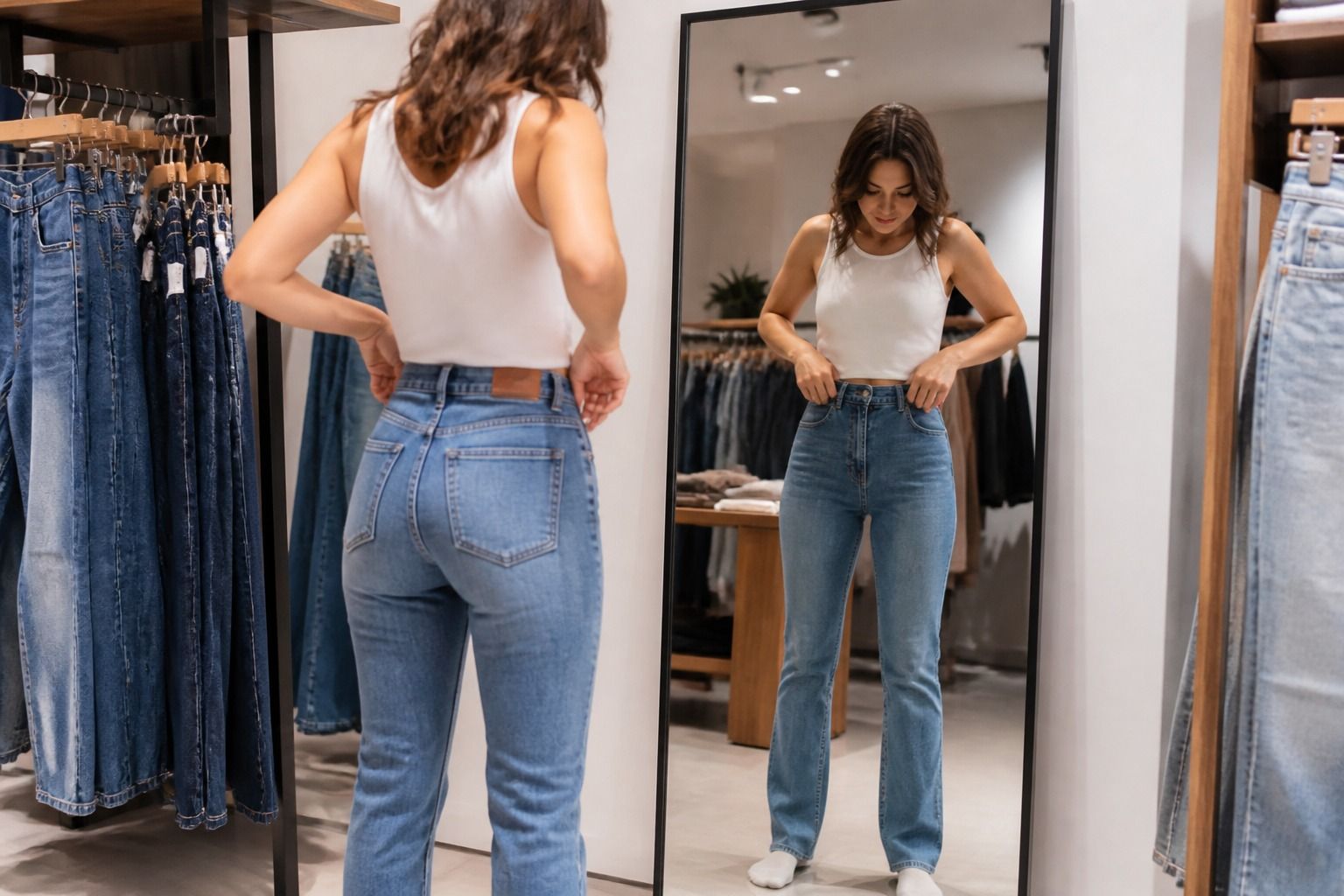
The practical issue is often the gap between hip room and waist fit. When trousers fit the hips but gape at the back, look for a contoured waistband, a curved back yoke, adjustable tabs, or a fabric with a little recovery. Size for the fullest point, then consider a simple waist alteration. Buying a too-small size to make the waist look neat usually produces pulling at the pockets and creases through the upper thigh.
Check pocket placement in the fitting room. Deep side pockets can add bulk if they stand open; flat front pockets or pockets placed slightly higher can lie more smoothly. Also look at the rise. A high rise may feel secure at the waist, but only if there is enough length through the seat for sitting. A mid-rise can be excellent when it matches your natural waist position. Walk, sit, and bend before deciding; the mirror alone misses the useful information.
| Fit point | What to try | What to check |
|---|---|---|
| Waistband | Contoured band, tabs, or tailoring | It stays flat at the back when seated |
| Rise | High or mid rise matched to your torso | No pulling across the seat or front crease |
| Pockets | Flat, secure pockets or a clean front | Pocket bags do not flare open |
| Hem | Straight, wide, or gently tapered leg | Hem width works with your usual shoes |
Use top-half details when you want a different emphasis
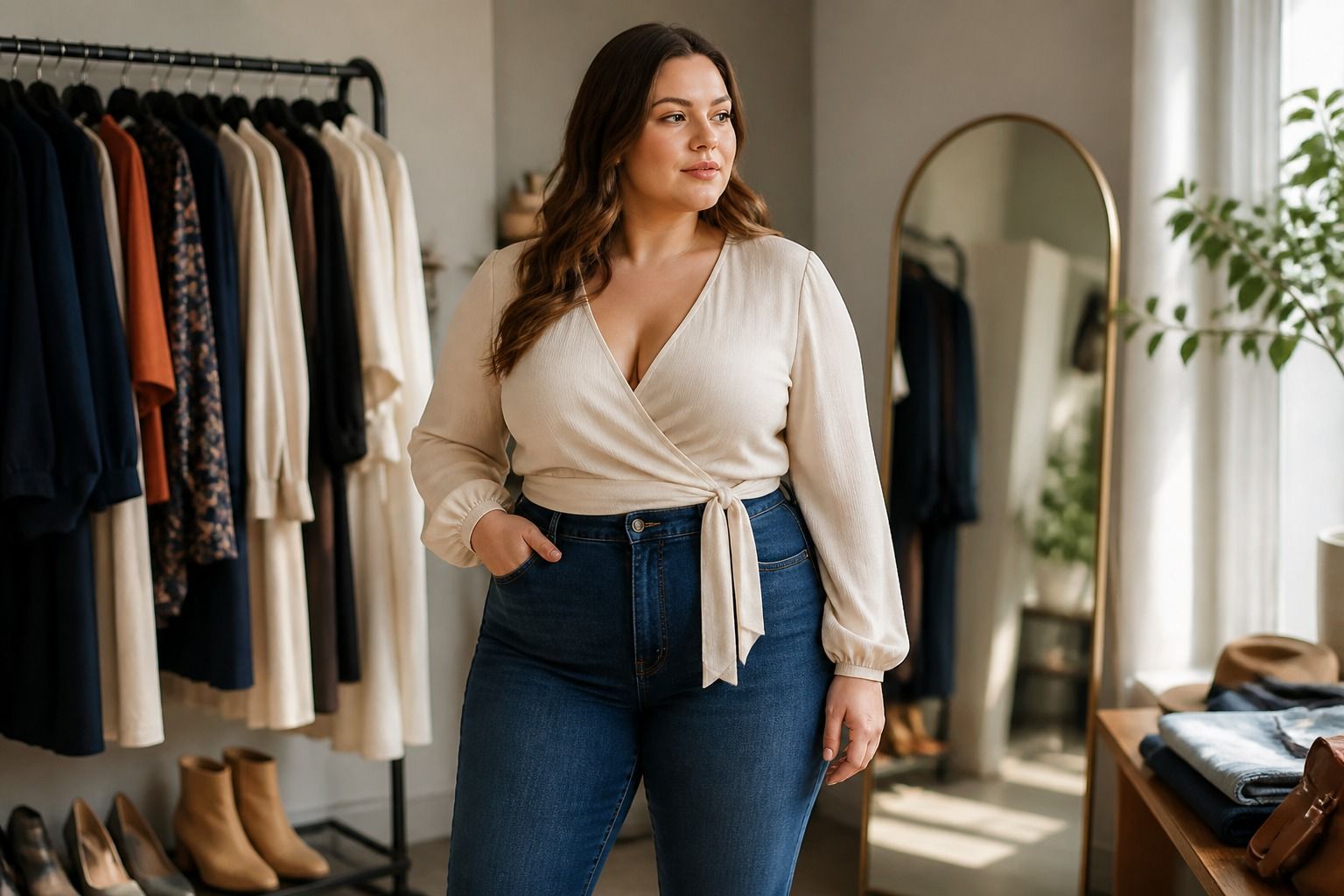
Necklines, sleeves, and shoulder details can change the visual rhythm of an outfit without requiring a costume-like “balance.” A boat neck, square neck, open collar, or softly structured shoulder may draw the eye upward because it creates a clear horizontal line. Puff sleeves and gathered shoulders can add volume, while a clean sleeveless top can make the shoulder line feel spare and direct. Choose the effect that suits the day and the garment, not a mandatory formula.
Colour and texture work the same way. A bright knit, an interesting collar, or a patterned shirt can become the focus above the waist. So can a simple white T-shirt with a well-cut jacket. On the other hand, a vivid skirt or printed wide-leg trouser can be the whole point of an outfit. The question is not whether it “balances” you; it is whether the pieces look intentional together and feel good while you move.
Choose trousers and skirts for their line and movement
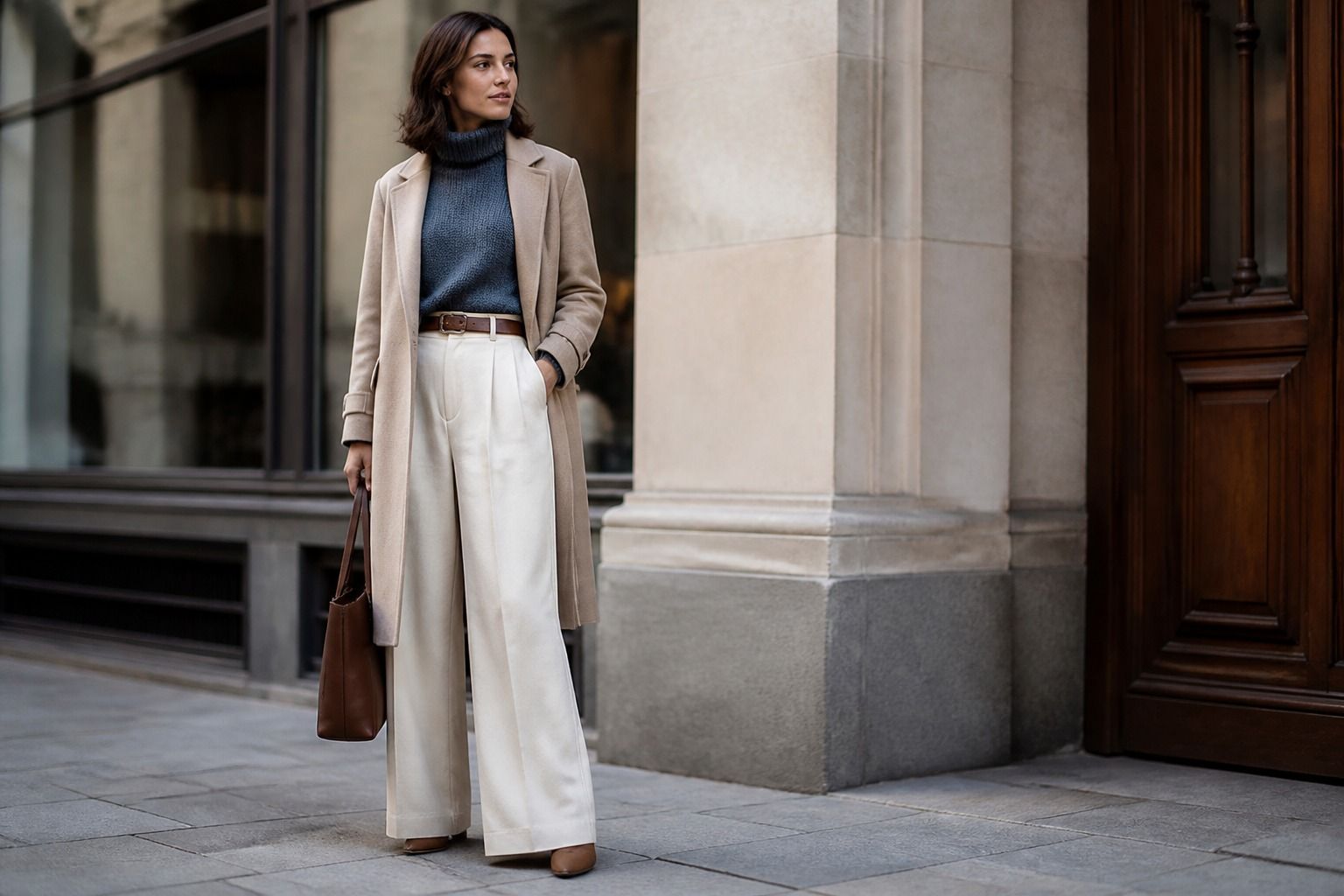
Wide-leg trousers are often appealing for a pear body shape because they provide room through the hip and fall in a clean line from there. The fabric makes the difference: a fluid wide leg swings easily, while a stiff one can stand away from the body. Straight-leg jeans, bootcut trousers, and relaxed tapered pants can be equally practical. Look at the side seam and the break over your shoe; a leg shape may seem wrong simply because the hem is too long or too short.
For skirts, an A-line is a dependable option because it gives ease through the hip without clinging. A bias-cut skirt has more movement and can work beautifully with a fine knit, though it may need a half-slip to avoid catching. A fitted skirt is not off limits; choose one with a vent, a comfortable waistband, and enough walking room. Try it with the shoes you will really wear, especially if the skirt is midi length.
Let jackets and layers set the outfit's structure
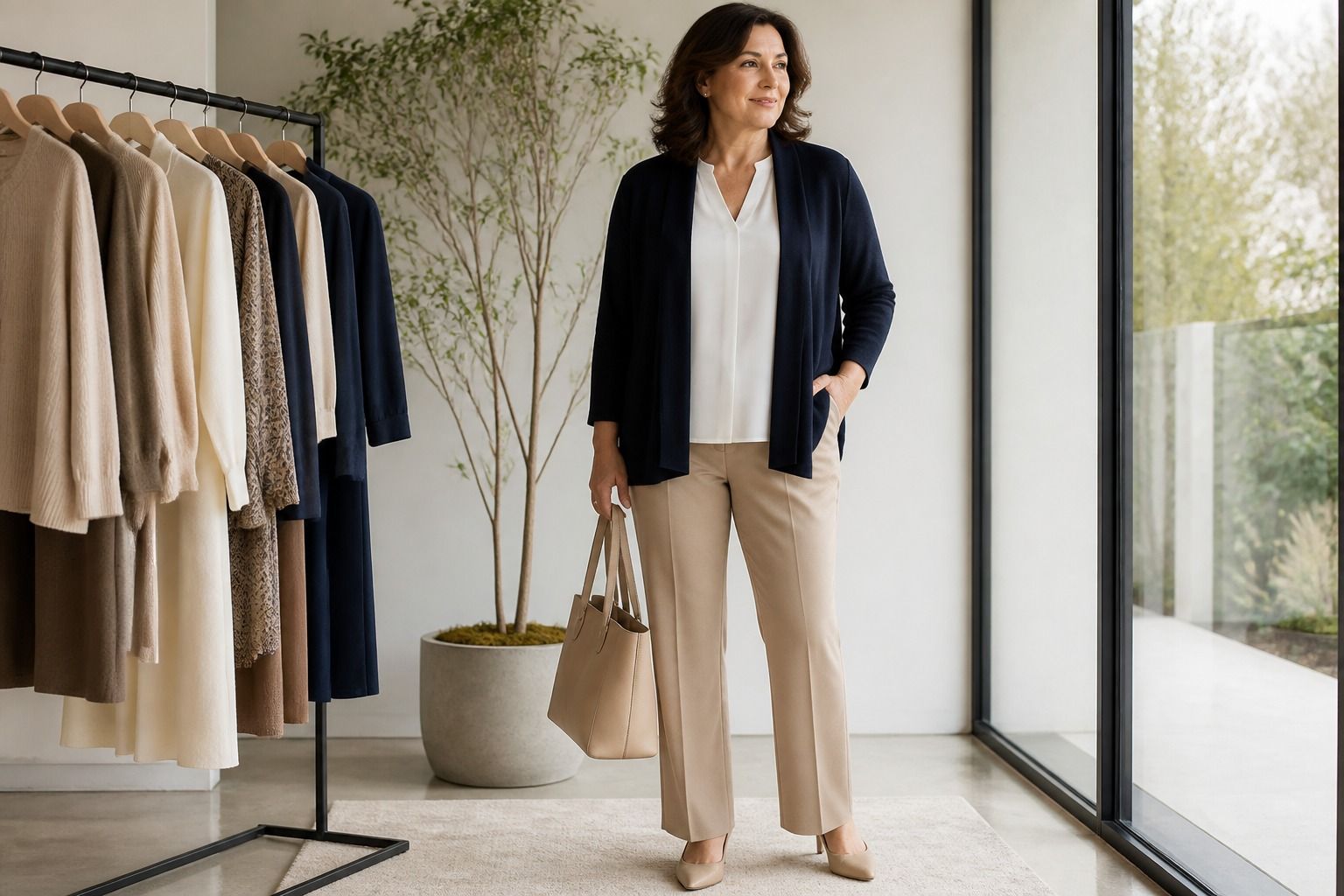
A structured jacket can make an outfit feel finished because it gives the shoulder line a clear shape and creates an outer frame around the waist and hips. Length is worth testing rather than following a rule. A jacket ending near the waist may feel crisp with high-rise trousers; a longer blazer can create an easy vertical line over a fitted top. If a hem cuts exactly across a point you dislike, move it by a few inches rather than abandoning jackets altogether.
Keep layering comfortable. A cropped cardigan, open shirt, or lightweight trench can add shape, but it should still allow you to sit, reach, and carry a bag. Notice where the sleeve seam meets your shoulder and whether the jacket pulls when it is buttoned. The most useful structured piece is one you will actually wear through a full day, not one that only behaves in front of a dressing-room mirror.
Alterations are often the quiet shortcut in this process. A tailor can bring in a waistband, adjust a hem to the shoe height you actually use, or move a closure so a jacket lies flat. Before buying a near miss, ask whether the garment has enough room at its fullest point and whether its fabric can be altered cleanly. A modest adjustment to a good base is usually more useful than chasing a supposedly perfect category of trouser or skirt.
Build outfits without hiding your body
Start with one reliable lower-body base: trousers that fit, jeans with a waistband you trust, or a skirt that lets you walk. Add a top based on your mood rather than a corrective strategy. You might pair wide-leg trousers with a close ribbed tank and open shirt, an A-line skirt with a roomy sweater half-tucked at the front, or fitted jeans with a dramatic sleeve. Repeating a few successful formulas gives you a useful starting point, not a uniform.
Keep notes on real-life outcomes. Did the pockets stay flat after lunch? Did the jacket still look good with the sleeves pushed up? Did the hem work on stairs? These details build more confidence than vague promises about being flattering. The pear body shape framework is at its best when it helps you find better-fitting clothes and gives you permission to make the proportions yours.