A personal style system should make the weekday morning easier, not give you another identity to perform. Body shape, personal colour, style essence, and mood boards can all offer useful clues, but none deserves the final word. The system starts working when it reflects your calendar, your laundry habits, your budget, and the clothes that still feel good after a long ordinary day.
Begin with the decisions you actually repeat
People often try to find their personal style by collecting labels: classic, romantic, dramatic, natural, minimalist. Labels can be enjoyable, but they are poor at choosing an outfit for a rainy Tuesday, a video call, and an evening train. Start with the decisions that recur: how much walking you do, whether you sit on the floor with children, what temperature your office keeps, and which occasions make you change clothes twice.
Use body shape and colour as inputs, not instructions
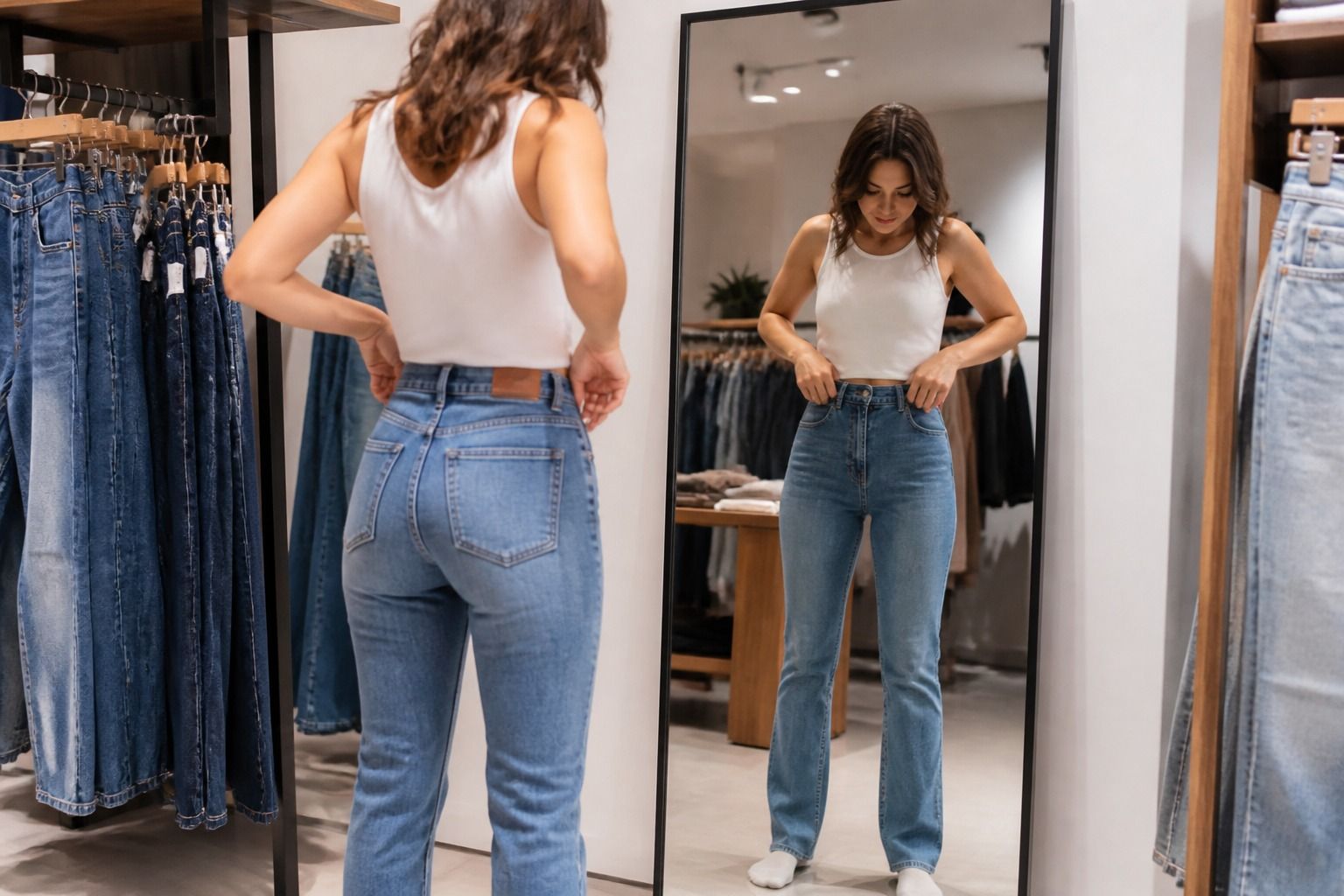
Body-shape frameworks can help you notice garment construction: where a waist seam lands, whether a shoulder is structured, how a wide leg relates to a cropped jacket. Personal colour can make you pay attention to the values and shades that make you feel awake or quietly at ease. Both are observations. They should not become a rule that bans a loved colour, a silhouette, or a trend you want to try.
Make the test concrete. Hold two tops near your face in daylight: one you wear constantly and one you keep avoiding. Is the difference colour temperature, brightness, neckline, fabric shine, or simply fit? Then try each with the same trousers. Separating variables prevents a colour system from getting blamed for a shoulder seam that never sat comfortably.
Style essence is useful in the same modest way. Perhaps you prefer a little structure, a relaxed texture, a sharp shoe, or visible jewellery. Treat those as adjustable dials. You might want clean lines for work and softer fabrics at the weekend. A good personal style system leaves room for those shifts instead of insisting on one permanent visual personality.
Turn observations into a few outfit formulas
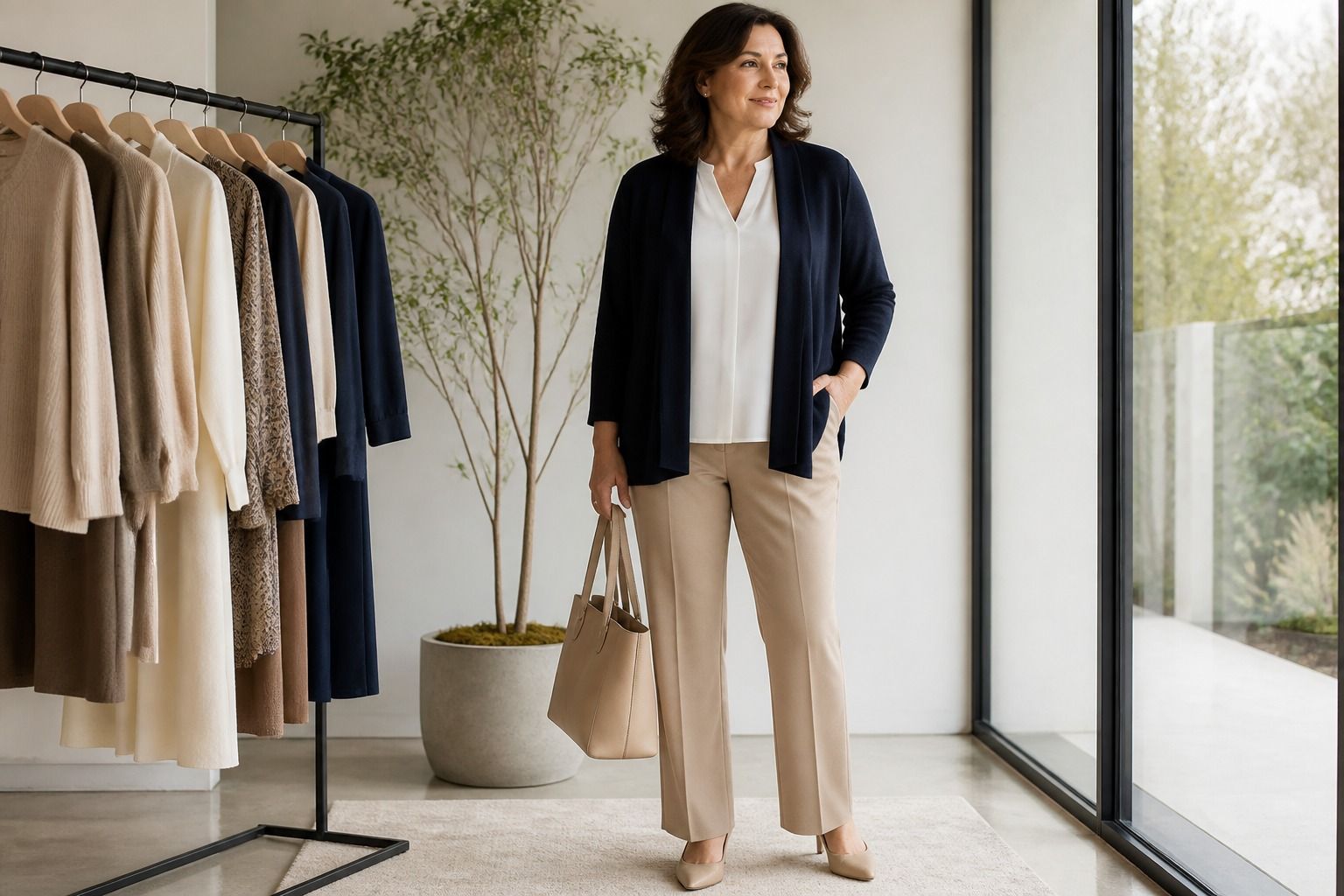
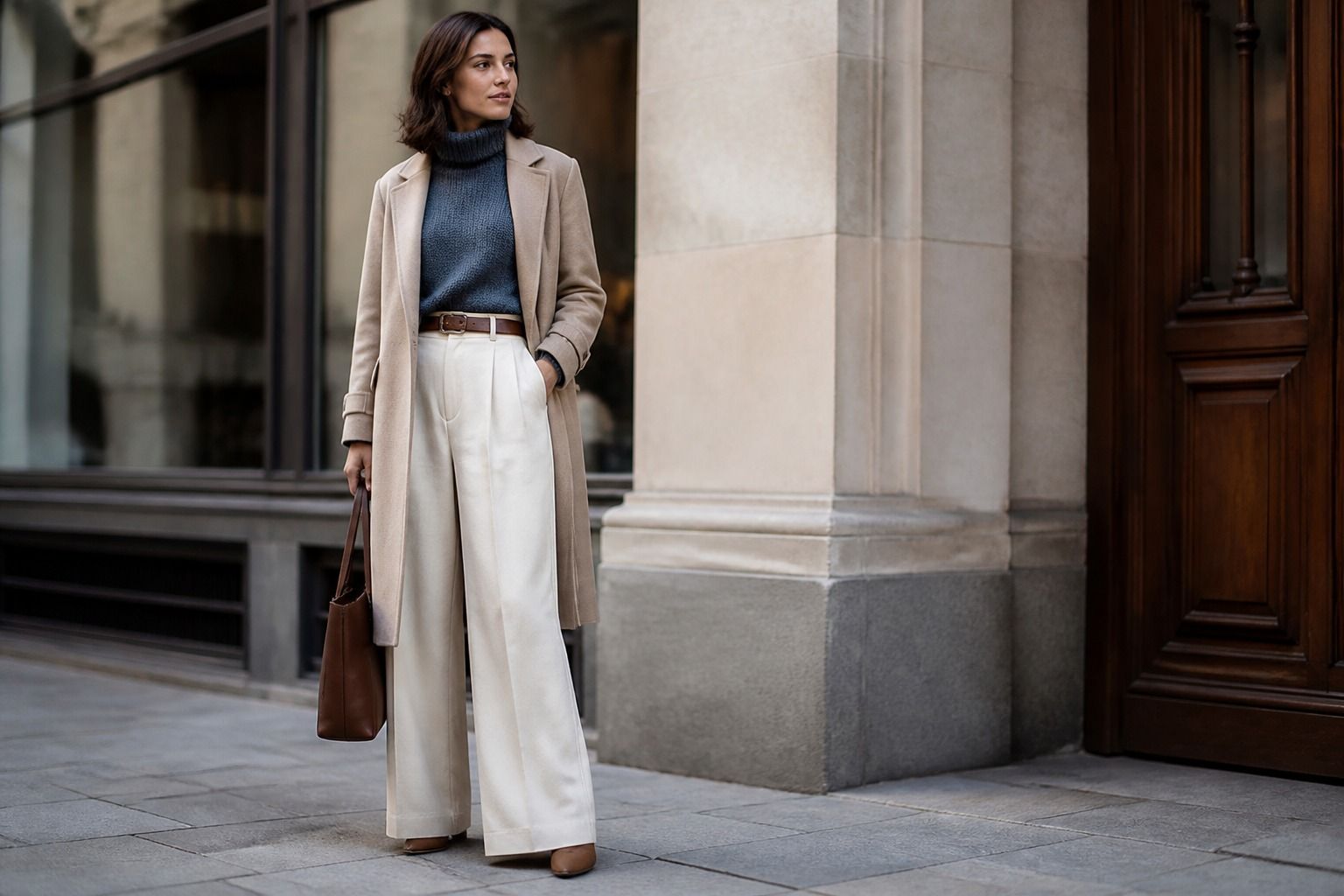
An outfit formula is not a uniform. It is a short recipe that reduces decision fatigue while leaving space for colour and detail. “Straight jeans + fine knit + loafers + one structured layer” is a formula. So is “midi skirt + fitted top + flat boot + relaxed jacket.” The useful part is that you can identify why it works for your proportions, comfort needs, and usual occasions.
Build three formulas first: one for the most ordinary day, one for a slightly more polished situation, and one for weather or travel. Include the boring details. If the formula needs a specific bra, sock height, bag, or coat length, write that down. Those small links are where good-looking ideas often collapse in practice.
| Formula | What it solves | Variables to swap |
|---|---|---|
| Easy weekday | Comfort, movement, quick layering | Knit colour, shoe, outer layer |
| Polished workday | Presence without costume-like dressing | Trouser cut, neckline, jewellery |
| Social plan | A little more intention after daytime plans | Texture, bag, lip colour, jacket |
| Travel day | Temperature changes and long sitting | Layer, fabric weight, practical shoe |
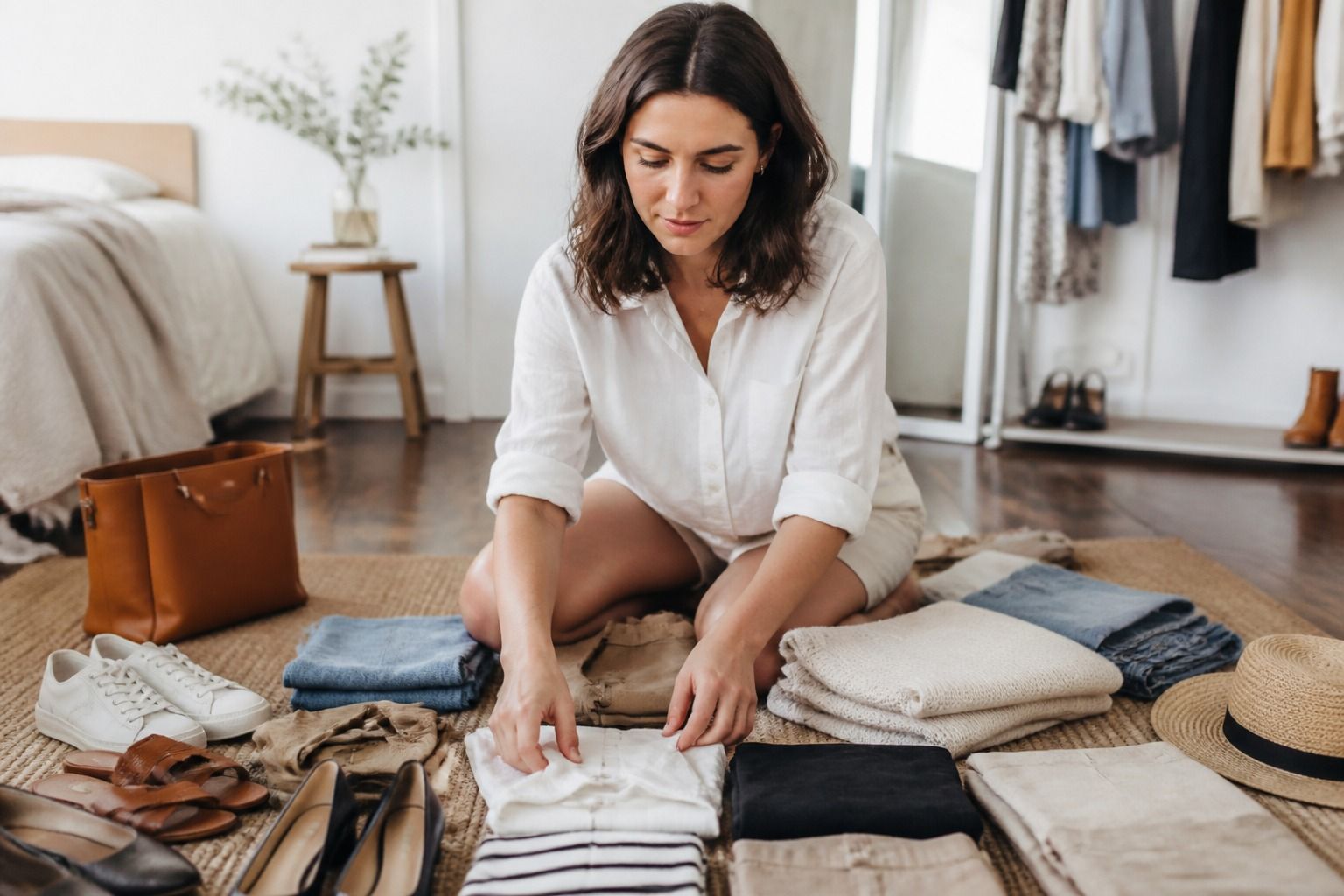
Keep each formula broad enough to survive real laundry. If it only works with one exact pair of trousers, it is an outfit, not a system. Aim for pieces that can move between at least two formulas before adding a category to the shopping list.
Run the system through a month of real life
Testing matters more than the first wardrobe audit. For four weeks, take a quick mirror photo when an outfit feels particularly easy or particularly wrong. Add one sentence: “jacket too stiff on the train,” “colour made the navy coat feel less severe,” or “heel stayed in the cupboard.” This is not content creation; it is a record of friction and ease.
At the end of each week, look for repeated outfits rather than judging yourself for them. Repeats are a clue to your working system. Maybe you like a high waist only with shorter tops, or perhaps a large tote makes your tailored coats feel more casual in a way you enjoy. Notice the fabrics you avoid too. A beautiful blazer that never leaves the hanger is not a foundational item.
Use the month to test one variable at a time. Wear the same trousers with two shoe shapes, or keep the silhouette but alter the colour contrast. If you change everything at once, the result is hard to read. Small experiments create a style system guide that belongs to you rather than a collection of borrowed rules.
Shop from gaps, and leave room for change
After the test period, make a short shopping list from actual missing links. Perhaps you have several tops for a favourite trouser but no layer that works over them. Perhaps your best social formula fails because every bag is too casual or every shoe is too precious for walking. Name the problem before naming the product. “A flat shoe that works with cropped trousers in wet weather” is far more useful than “new shoes.”
Give each item a budget and a role. If a purchase cannot connect to an existing outfit formula, pause it for a week. This is not anti-shopping; it protects you from buying another isolated possibility. A personal style system grows through useful connections, not through a perfectly curated rail of clothes.
Finally, expect the inputs to change. Work, climate, taste, hair, schedule, and confidence all move over time. Revisit the notes when your life changes, keep the pieces that still earn their place, and let the rest become information rather than guilt. A system that can adapt is the one you will keep using.
When a new influence catches your eye, test it as a small addition instead of rebuilding everything around it. Borrow a colour, a shoe shape, or a fabric texture and wear it with one trusted formula. That keeps curiosity in the system without creating pressure to become someone else overnight. The most convincing style usually looks accumulated: a clear point of view, a few practical compromises, and enough flexibility for an unexpected invitation or an unglamorous errand. Keep a record of the experiments that worked; they become a gentler shopping filter than a trend forecast.